



China's radiation-tolerant 2D system could revolutionize space electronics









Researchers in China have developed a radiation-tolerant semiconductor system as thin as a single layer of an atom, a breakthrough that could solve one of the most persistent hurdles in space exploration: the vulnerability of electronics to cosmic rays.
The team from Fudan University in Shanghai published their findings on Thursday in the journal Nature, marking the first time such "two-dimensional", or 2D, electronic systems have been validated through actual performance in space.
As spacecraft travel deeper into the void, they are bombarded by high-energy particles and cosmic rays. In traditional electronics, these particles cause performance decay or total failure. While engineers usually protect systems by adding heavy shielding or extra backup circuits, these fixes add significant weight and cost — two things space agencies desperately try to avoid.
The Fudan team discovered that because 2D materials are only one atom thick, there is almost no physical "bulk" for radiation to damage. This makes the material intrinsically immune to the harsh environment of space. To test this, the researchers used the "Fudan No 1 Lancang-Mekong Future Satellite", launched in September 2024. They built a radio frequency communication system — the hardware responsible for sending and receiving data — using a 4-inch wafer of monolayer molybdenum disulfide.
The results from the low Earth orbit test, conducted at an altitude of 517 kilometers, showed the system remained stable after nine months of operation. Its data transmission error rate stayed below one in 100 million, demonstrating what researchers described as excellent radiation tolerance and long-term stability.
The researchers claim the technology offers massive advantages over current silicon-based electronics in terms of both longevity and efficiency. In the intense radiation of a high-altitude geosynchronous orbit, the system is estimated to last 271 years, which is roughly 100 times longer than traditional silicon systems. Furthermore, the system weighs only 10 percent as much as current hardware and uses less than one-fifth of the power, a critical factor for missions relying on limited solar power or batteries.
While previous studies on 2D materials were limited to computer simulations or ground-based lab tests, the Fudan team says this on-orbit validation proves the technology is ready for real-world application. Zhou Peng, a lead researcher at Fudan University's State Key Laboratory of Integrated Chips and Systems, said the breakthrough is expected to advance China's capabilities in deep space exploration, high-orbit satellites, and eventually, the construction of bases on other planets.
The team plans to expand the research to include advanced radar and remote sensing technologies. The researchers hope the success of this mission will encourage global academic and industrial partners to help bring 2D electronics into mass production.
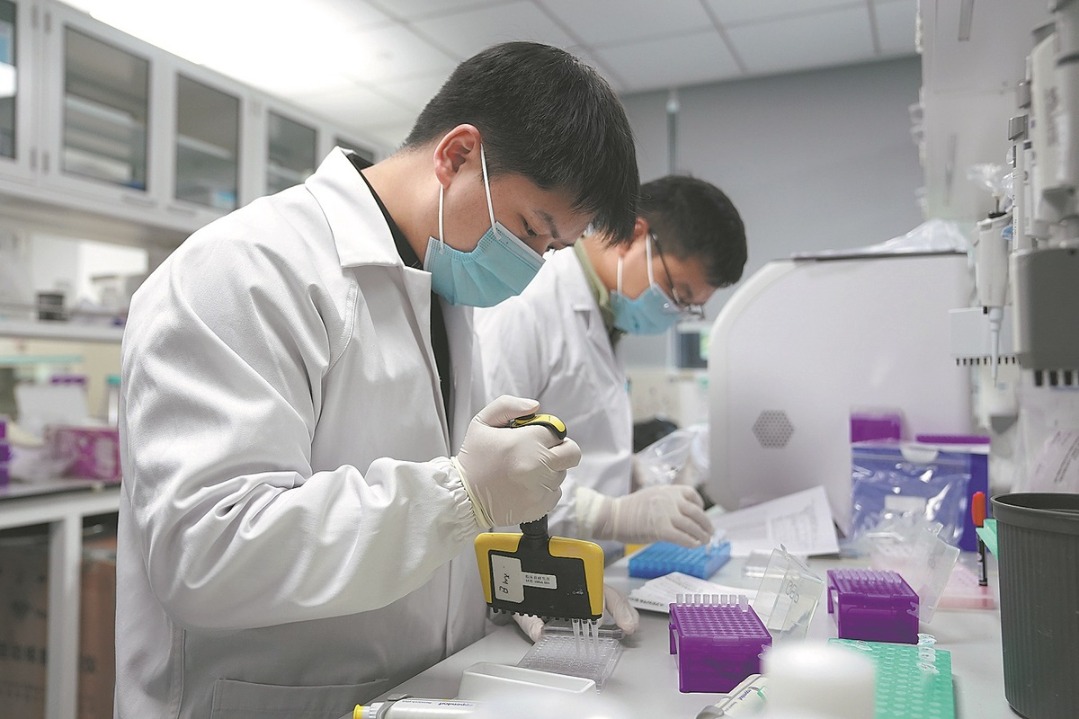





- China's radiation-tolerant 2D system could revolutionize space electronics
- International team gets close look at China's grassroots policing
- Ultra-strong magnet sets world record
- 2025 border crossings hit record high
- Domestic drugmakers take center stage in development, innovation
- Restored moat better reflects glory of Xi'an city wall