



Reach for the stars









Lunar missions
China launched its robotic lunar exploration program in 2004, naming it Chang'e after the moon goddess in Chinese legend.
Chang'e 1 probe's tasks included obtaining lunar images and performing scientific surveys. It was launched on Oct 24, 2007. In 2008, a map of the entire lunar surface, based on data from Chang'e 1, was published.
Chang'e 2 was launched on Oct 1, 2010, to conduct high-definition imaging of the moon and check landing conditions for the Chang'e 3 probe. Chang'e 2 is now on a mission to verify deep-space technologies.
Chang'e 3, a milestone in the nation's space exploration history, was launched from Xichang on Dec 2, 2013. It was the first Chinese spacecraft to soft land on the moon. It released the country's first lunar rover onto the moon's surface.
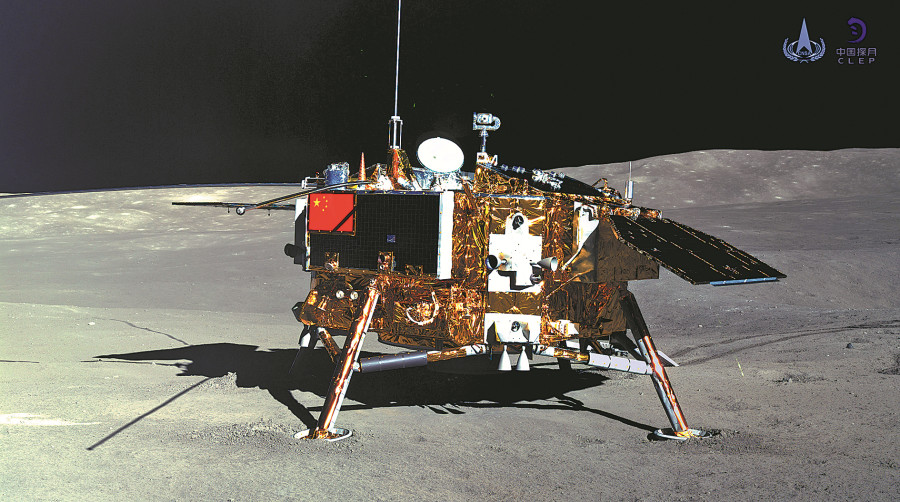
Chang'e 4 was launched on Dec 8, 2018. It completed a soft landing on the far side of the moon, making it the first expedition in the history of space exploration to visit the unexplored lunar region.
Chang'e 5 was launched on Nov 24, 2020, and landed on the moon on Dec 1 that year. The 23-day, landmark mission carried 1,731 grams of lunar rock and soil to Earth on Dec 17. Chang'e 5 was one of China's most sophisticated and challenging space endeavors, and made China the third country to retrieve materials from the moon after the United States and the former Soviet Union.
Chang'e 6 is expected to be launched around 2025 to land on the far side of the moon and bring back samples.
Chang'e 7 will search for traces of water at the moon's South Pole, investigate the environment and weather there and survey its landform.
Chang'e 8 is tasked with landing near Chang'e 7 on the moon's South Pole, allowing the two missions' components — orbiters, landers, rovers and detectors — to work together to form a prototype of a robotic scientific outpost.






- China to boost extreme weather forecasting capabilities in 2026
- China hits 469m motor vehicles in 2025 amid drop in dangerous driving cases
- Fujian deepens cross-Strait integration with Taiwan through infrastructure and cultural initiatives
- Winter sports push tourism in NE China's Jilin
- 'Beijing Rocket Street': A launchpad for accelerated development
- Capital city targets 5% GDP growth for 2026