



Chinese researchers reveal yak adaptation secrets









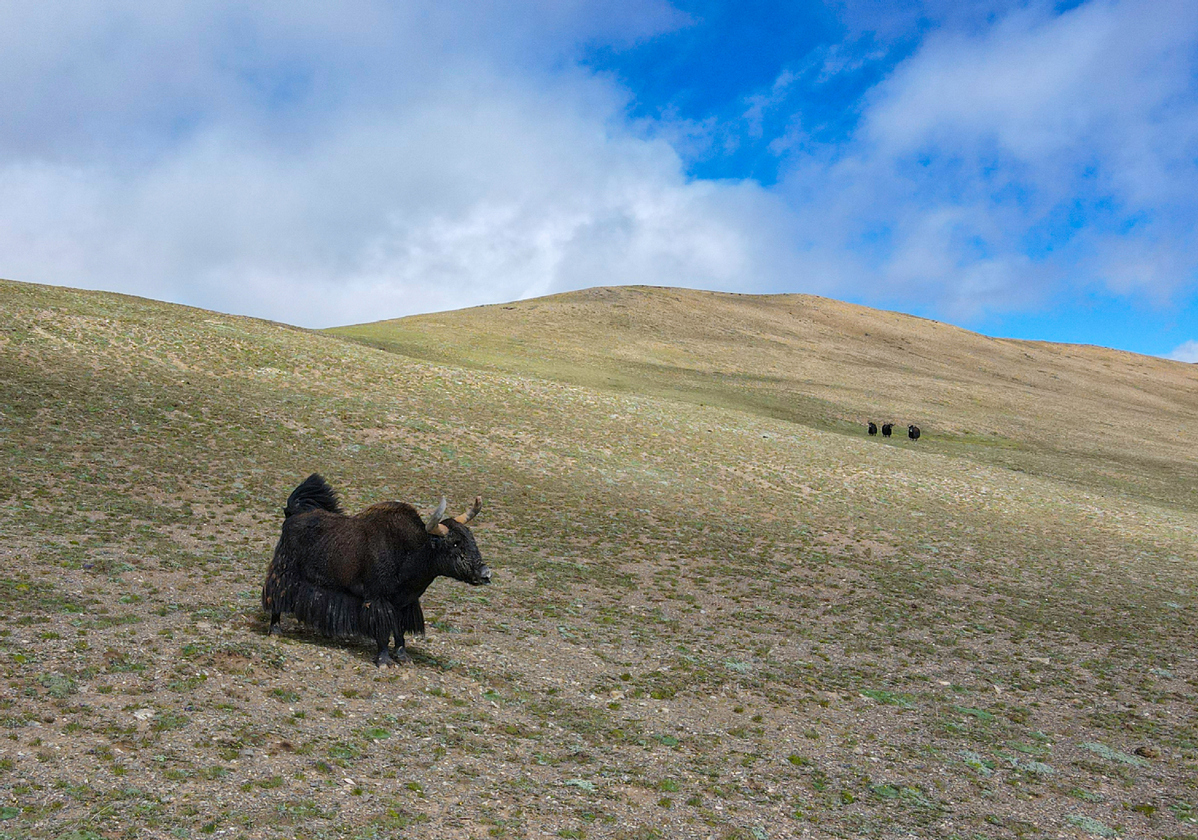
BEIJING -- Chinese researchers have revealed genetic and cellular mechanisms underlying adaptations of yak to low-oxygen environments.
Wild and domestic yak can adapt to the high-altitude environment of the Qinghai-Tibetan Plateau, while non-native mammals, including humans, may have serious lung and heart problems when they are exposed to hypoxia on the plateau.
Based on the data of genomics and transcriptomics, researchers from the Northwest Institute of Plateau Biology under the Chinese Academy of Sciences assembled two chromosome-level genomes, one each for wild yak and domestic yak, and screened structural variants (SVs) through the long-read data of yak and cattle.
127 genes carrying special types of SVs were differentially expressed in the lungs of cattle and yak. Researchers then found a yak-specific endothelial cell subtype which expresses genes associated with adaptation to a low-oxygen environment, according to the findings published in the journal Nature Communications.
These findings provide new insights into the high-altitude adaptation of yak and have important implications for understanding the physiological and pathological responses of large mammals and humans to hypoxia.





- Over 7.3 million people recorded as registered organ donation volunteers in China
- China says Nipah outbreak poses limited risk
- PLA's aerobatic jets arrive in Singapore to take part in air show
- China's garbage sorting drive still has a long way to go in many cities
- Former Chengdu official Bao Hui under investigation
- Bouncy fish ball captures the attention of Guangdong deputies