



Hebei-Beijing clean power transmission project nears completion









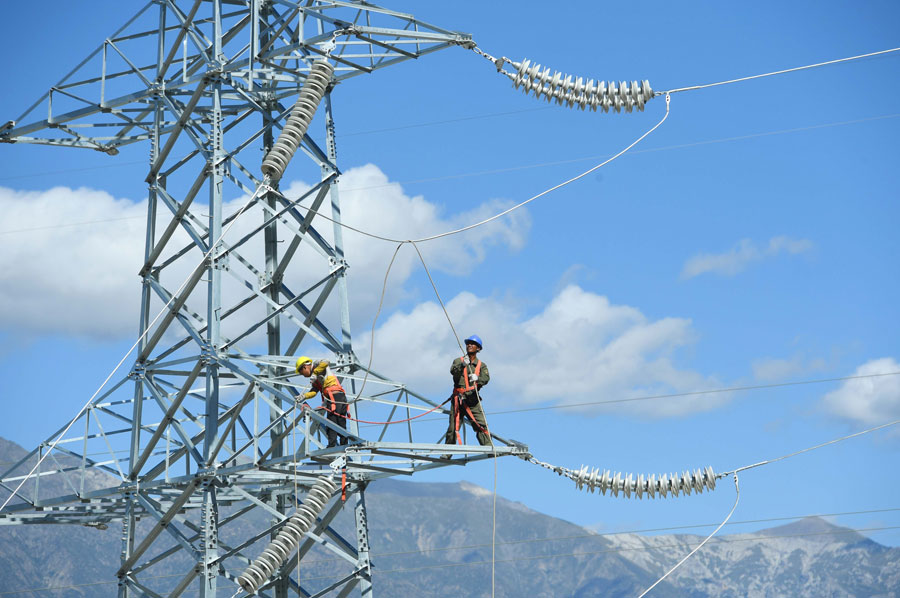
The construction of a power transmission project, which will supply Beijing with electricity generated by renewable energy in the neighboring Hebei province, is near completion, according to Hebei Daily.
The building of the project's section from Fengning in Chengde, Hebei, to Beijing is finished and is expected to be put into use by the end of the year, the report quoting a power transmission and distribution company said.
It said the project is the world's first renewable energy-based flexible direct current power transmission system.
After its completion, the venues for the 2022 Winter Olympics in the capital can use 100 percent clean energy power, including wind power and photovoltaic electricity.
With a voltage rating of 500 kilo-volt and a total convert capacity of 9 million kilowatts, it boasts the world's highest voltage class and the highest conveying capacity among flexible direct current projects, Xinhua News Agency reported.
The direct current power transmission line, stretching 666 kilometers long, will have four new converter stations in Zhangbei and Kangbao in Zhangjiakou, Fengning in Chengde and Beijing, all of which will be in operation in the first half of 2020, the report said.
As the country's renewable energy demonstration zone, Zhangjiakou has abundant wind and solar energy, whose installed capacity will top 20 million kilowatts in 2020.
The system's flexibility means flexible operation control, high-level intelligence and more stable power system, which stands for the cutting-edge technology in the field of power grid, the report said.






- China to boost extreme weather forecasting capabilities in 2026
- China hits 469m motor vehicles in 2025 amid drop in dangerous driving cases
- Fujian deepens cross-Strait integration with Taiwan through infrastructure and cultural initiatives
- Winter sports push tourism in NE China's Jilin
- 'Beijing Rocket Street': A launchpad for accelerated development
- Capital city targets 5% GDP growth for 2026