


'Becoming Chinese' takes social media by storm on rising curiosity
Trend: Expanding soft power helps spread of Chinese lifestyle










Chen Qiang / For China Daily
Sip hot water; wear slippers at home; start the day with a bowl of comforting congee. This advice might sound too basic to Chinese people, for whom these are everyday rituals, but for a global audience curious about contemporary Chinese lifestyles, these are nuggets of wisdom that deserve to be adopted.
When content creator Sherry XiiRuii started uploading humorous tutorials about everyday Chinese habits on social media hashtagged #BecomingChinese in late 2025, she probably did not think her videos would amass millions of views and become a viral social media trend.
Within just two months, her series of more than 20 videos — framed as a practical guide to "becoming Chinese" — averaged 1 million views each.
In the videos, the Chinese American creator, who has more than 9 million followers on TikTok, playfully explains the Chinese take on wellness and household customs. Her success has sparked a wave of imitations across TikTok, Instagram and Facebook, with creators espousing the virtues of soaking one's feet in warm water before bed.
Sipping ginger tea and trying acupuncture are also among those praised, as well as the proclamation, "You met me at a very Chinese time of my life".
The trend has gained so much traction in recent weeks that it has drawn the participation of celebrities such as United States comedian Jimmy O Yang and influencer Hasan Piker.
It has also evolved beyond daily rituals, spurring related trends like #ChinaMaxxing — a hashtag that conveys growing online appreciation for China's infrastructure, urban development, public safety and modern conveniences. For many, China's success in these areas offers a viable alternative to the Western way of living.
In a recent interview with CGTN, XiiRuii said that while mainstream exposure to Chinese culture remains superficial in the US, introducing simple daily habits that are easy to adopt has created an accessible entry point for global audiences. Although she expects the initial social media hype to fade, she hopes a more meaningful outcome of her creations would be a lasting openness toward Chinese culture.
"What matters the most is that people are willing to learn about Chinese culture and keep it up," she said.
Observers attribute the viral spread of Chinese lifestyle content to several factors: a Western curiosity for ancient wellness practices, the younger generations' growing focus on healthy and sustainable living, and China's expanding soft power.
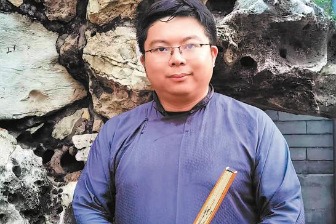
Simon Zundl, a German logistics and export packaging professional who lived in China from 2012 to 2019 and still visits the country regularly, said that he thinks the trend is driven by a global appetite for "ancient wisdom" and a more holistic way of life — values he finds still accessible in Chinese society.
Zundl first arrived in China in 2010 as a student and was immediately struck by the cultural contrasts. Over time, exposure to traditional Chinese medicine changed his perspective. He came to appreciate the health rationale behind habits like drinking warm water and ginger tea, eventually sharing them with his family in Germany. To him, the #BecomingChinese trend reflects a sustainable movement toward deeper cross-cultural understanding.
"It's important for people to come and see for themselves rather than blindly believe third-party narratives," said the 37-year-old.
Shi Anbin, a professor at Tsinghua University and director of the Israel Epstein Center for Global Media and Communication, connected the trend to Generation Z's increasing focus on wellness and sustainability. He described habits such as drinking hot water and wearing slippers indoors as aspects of a broader philosophy oriented toward well-being and environmental consciousness.
According to Shi, this shift reflects a global reappraisal of Chinese rituals and practices once perceived as outdated. He cited the growing Western interest in China's traditional farming methods, which are reliant on organic fertilizers, as one key example.
Growing global influence
The #BecomingChinese trend also reflects a broader expansion of China's cultural influence, which now reaches global audiences through animated blockbusters, designer toys and innovations in artificial intelligence and robotics. This growing appeal is reflected in the Brand Finance Global Soft Power Index 2025, where China ranked second worldwide, surpassing the United Kingdom.
This rise in soft power is being reinforced by increased people-to-people exchanges. Facilitated by initiatives such as the Belt and Road and streamlined visa-free transit policies, more international visitors are experiencing Chinese society directly, helping to reshape perceptions long influenced by a biased Western media. A prime example of this authentic engagement occurred last summer, when US influencer IShowSpeed's candid livestreams from China attracted tens of millions of views and were widely praised for their unfiltered, cross-cultural perspective.
Qu Qiang, an expert in regional and country studies at Minzu University of China in Beijing, described the #BecomingChinese trend as grassroots, peer-to-peer cultural exchange, distinct from past icons like pandas or kung fu. "This emerged organically overseas, with foreign netizens adopting small, daily habits that we ourselves don't even see as 'culture,'" he said.
Qu argued that the trend reflects both the enduring appeal of Chinese civilization and a Western search for balance amid social fatigue and division. "It's a resonance — a pull from the depth of Chinese living wisdom and a push from the fractures in Western societies," he said.
He added that as global users engage with Chinese innovations in payments, robotics and design, their curiosity would naturally extend to the lifestyle and mindset behind these advances.




- Former Jiangxi official sentenced to life for bribery
- China secures first extradition from South Africa
- China’s drug-related cases decline, but new drug challenges emerge
- Fuzhou announces free metro and bus services during Spring Festival
- One family's journey reflects changes in travel during Spring Festival
- Judicial oversight campaign tackles improper enforcement against businesses