


Another calculated provocation from Takaichi that will be duly answered









Japanese Prime Minister Sanae Takaichi claimed on a TV Asahi program on Monday that the US-Japan security alliance would "collapse" if Japan did not respond to an attack on US forces during a hypothetical conflict in the Taiwan Strait. These irresponsible remarks have not only dealt a fresh blow to the already strained China-Japan relations but also exposed the dangerous intentions of Japanese right-wing political forces.
As Foreign Ministry spokesman Guo Jiakun said in a regular news conference in Beijing on Tuesday, historically and legally, Japan has no right to comment on China's Taiwan region. He underscored that Japan's repeated interjections once again expose the ambitions of Japanese right-wing forces to stir up confrontation, create trouble, and use the opportunity to promote "remilitarization". As Guo stressed, the Takaichi government's challenging of the postwar international order poses a serious threat to regional peace and stability, and the international community must remain highly vigilant and resolutely resist it.
Guo pointed out that Japan bears serious historical responsibility to the Chinese people as it subjected Taiwan to colonial rule for half a century, committing heinous crimes. He urged Japan to abide by the spirit of the four political documents between China and Japan and the political commitments it has made, to earnestly reflect on its mistakes and correct them, and to stop manipulating and making reckless moves on the Taiwan question.
Takaichi's latest doubling down on her Nov 7 remarks in the Diet — suggesting that a contingency in the Taiwan Strait could entail Japanese military involvement — came shortly after she dissolved the House of Representatives and called a snap election, showing her intent to capitalize on nationalist sentiment to help the ruling Liberal Democratic Party secure greater leverage in the lower house.
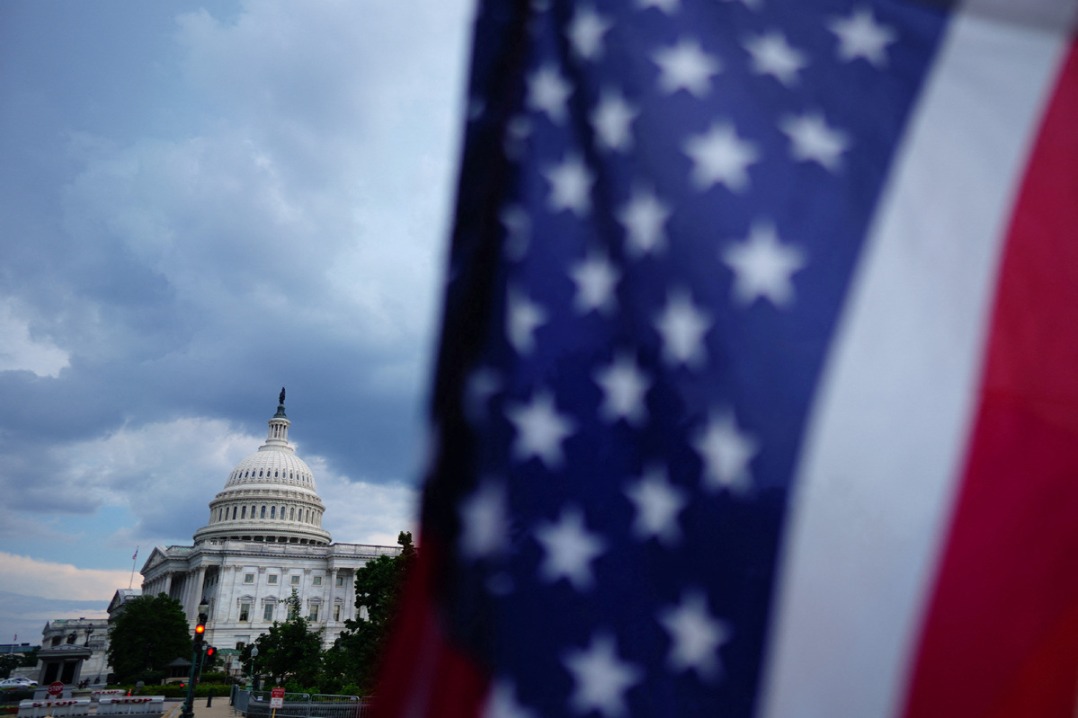
Takaichi's remarks were essentially political theater aimed at smoothing the path for her right-wing agenda. The timing betrays a calculated attempt to exploit the US' isolation after many Western allies distanced themselves from it at the Davos meeting following its Greenland land-grab attempts. By proclaiming unwavering "loyalty" to the alliance, she aims to coax the US into turning a blind eye to Japan's remilitarization, entangle Washington further in the "crisis" she has engineered, and disrupt the joint efforts by Beijing and Washington to steady China-US relations.
All these maneuvers come at the expense of China-Japan relations — and, more importantly, the well-being of the Japanese economy. Takaichi's previous remarks concerning the Taiwan question have already had tangible economic repercussions.
Beijing has remained restrained in response to Takaichi's provocations, but any further deterioration in ties risks amplifying the pressure on Japanese industries and the country's growth prospects as China is Japan's second-largest export market after the United States, importing roughly $125 billion dollars' worth of Japanese goods in 2024, spanning automobiles, machinery and electronic components. This trade underpins large segments of Japanese manufacturing jobs. China is also one of Japan's most important sources of inbound tourism, with official Japanese data showing that reduced travel flows amid the heightened tensions between the two countries have weighed on local consumption and services.
Data from flight information platform Flight Master showed that as of Monday, 49 China-Japan routes had canceled all flights scheduled for February, an increase from this month. In January, the cancellation rate for flights from Chinese mainland to Japan stood at 47.2 percent, up 7.8 percentage points from December.
In a sluggish global economy marked by uncertainty and rising protectionism, needless confrontation only exacerbates risks to jobs, investment and prosperity. China's firm but measured response underscores a consistent message — respect for China's core interests and refraining from provocations are prerequisites for stable bilateral ties.
Leadership requires prudence, vision and responsibility, not hot-headed gambits. By persisting in reckless posturing on the Taiwan question, Takaichi is re-emboldening the secessionist-minded authorities of Taiwan led by Lai Ching-te, who must have been left deflated after the 2026 US National Defense Strategy conspicuously omitted Taiwan.
Rather than demonstrating political acumen in a bid to pursue her right-wing agenda, Takaichi is leading her country down a one-way path fraught with risk. Japan should heed the lessons of history, honor its commitments, and return to dialogue and cooperation. Only by doing so can China-Japan relations be put back on a sound footing, contributing to peace and stability in the region rather than undermining them.
liyang@chinadaily.com.cn