


On right side of history: China's commitment to global cooperation










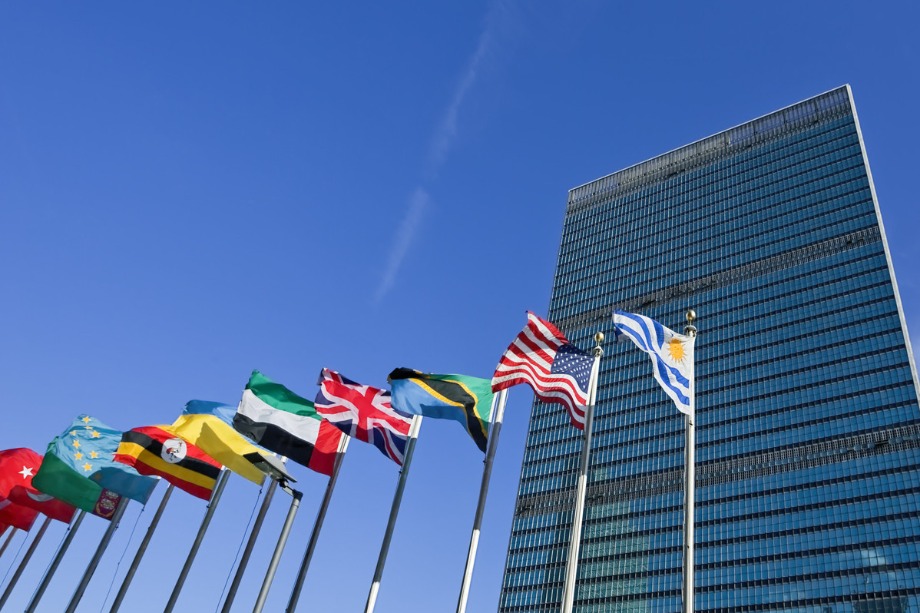
The international landscape is undergoing a profound and visible transformation. At a moment when global challenges demand stronger cooperation, the United States is undermining multilateralism and weakening the foundations of global governance.
Once a principal supporter of the international system that emerged from World War II, Washington is now retreating from collective institutions, questioning shared rules and prioritizing unilateral action. This shift is deliberate and systematic. It weakens global cooperation and injects uncertainty into an already fragile world.
In recent years, the United States has withdrawn from international organizations, reduced its participation in United Nations agencies, and increasingly relied on unilateral pressure rather than consultation. Multilateral rules are treated as optional. International institutions are supported only when they serve narrow national interests. Sanctions, coercion and unilateral decisions replace dialogue and cooperation. These actions do not strengthen global stability. They undermine it.
This approach erodes fairness and justice in international affairs. It weakens the authority of the United Nations and damages trust among nations. When a major power abandons shared institutions, the cost is borne not only by those institutions, but by the entire international community. Global cooperation suffers. Collective capacity declines. Uncertainty grows.
For countries in the Global South, the consequences are particularly serious. Challenges to development persist. Climate risks intensify. Health security remains fragile. Regional conflicts continue to threaten peace and stability. These problems cannot be solved through unilateralism. They demand cooperation, coordination and shared responsibility. Undermining multilateral institutions at such a moment does not protect national interests. It harms the common interests of humanity.
China has chosen a fundamentally different path. At a time when multilateralism is under pressure, China safeguards it. At a time when unilateral actions weaken global governance, China strengthens it. China has made clear that the United Nations remains the cornerstone of the international system and that global governance must be improved, not abandoned. This position reflects China's consistent commitment to fairness and justice, win-win cooperation, and a shared destiny for humanity.
China's commitment to multilateralism is reflected in concrete action. China remains deeply engaged across the United Nations system in development cooperation, peace and security, humanitarian assistance, and global coordination. China supports multilateral solutions because it recognizes a basic truth. No country can achieve lasting security or prosperity alone. Cooperation is stronger than confrontation. Dialogue is more effective than pressure. Win-win cooperation serves the interests of all countries.
The Global Development Initiative embodies China's approach to global governance. It focuses on poverty reduction, food security, public health, industrial development, digital connectivity and green growth. It reflects China's belief that fairness and justice cannot exist without development and that global governance must address the real needs of the Global South.
Development is the foundation of peace and stability. Without development, inequality deepens, and instability spreads. Without development, climate action lacks credibility. Without development, health security remains uneven and fragile. The Global Development Initiative aligns international cooperation with these realities and promotes shared growth, shared benefits and shared responsibility. It is a practical expression of win-win cooperation and a shared destiny of humanity.
China's approach to climate governance clearly demonstrates this principle. Through cooperation with United Nations agencies and international partners, China supports renewable energy projects, green infrastructure and sustainable development initiatives in developing countries. These efforts promote fairness and justice by respecting different development stages and capacities. They advance win-win cooperation by combining environmental responsibility with economic opportunity. Climate cooperation, in this vision, unites countries rather than divides them.
The same development-centred philosophy guides China's approach to global health. The COVID-19 pandemic showed that health security is indivisible. No country is safe unless all countries are safe. China supported multilateral cooperation through the United Nations to strengthen public health systems, improve preparedness and protect vulnerable populations. These efforts were guided by the belief that health security is a global public good and that solidarity is essential. Isolation and politicization weaken collective resilience. Cooperation strengthens it.
China also remains firmly committed to the role of the United Nations in maintaining international peace and security. As a permanent member of the Security Council, China supports resolving conflicts through dialogue and negotiation. China contributes to UN peacekeeping operations and upholds the authority of the United Nations in safeguarding world peace and stability. These actions reflect China's consistent position that security should be pursued through collective mechanisms and shared responsibility, not unilateral intervention.
At the core of China's approach lies the vision of building a community with a shared future for humanity. Shared challenges require shared solutions. Shared risks demand shared responsibility. This vision rejects zero-sum thinking and power politics. It promotes mutual respect, equality and win-win cooperation. It places fairness and justice at the heart of international relations.
The contrast with the United States is increasingly stark. Where the United States undermines multilateral cooperation, China safeguards it. Where Washington retreats from international institutions, China remains engaged. Where unilateralism expands, China defends dialogue and consultation. This contrast reflects two fundamentally different approaches to global governance. One weakens collective institutions. The other strengthens them.
Global leadership is not defined by dominance or coercion. It is defined by responsibility and commitment. Moral authority in international affairs is earned through action, not rhetoric. It is earned by defending multilateralism when it is under pressure. It is earned by safeguarding fairness and justice when they are challenged. It is earned by choosing win-win cooperation over confrontation.
The international system is undergoing a decisive test. One path leads toward fragmentation, unilateralism and growing instability. The other leads toward cooperation, reform and shared progress. China has made its choice. By upholding the authority of the United Nations, advancing the Global Development Initiative, and promoting fairness and justice, China is helping to safeguard global governance at a critical moment.
Improving global governance is not an abstract ideal. It is a practical necessity. In a world facing shared risks, safeguarding multilateralism means safeguarding the future. China's commitment to this path is clear, consistent and resolute.
Virdika Rizky Utama is the executive director of PARA Syndicate, a Jakarta-based independent think tank.
The views don't necessarily reflect those of China Daily.
If you have a specific expertise, or would like to share your thought about our stories, then send us your writings at opinion@chinadaily.com.cn, and comment@chinadaily.com.cn.