



Oh deer, what a comeback for wildlife









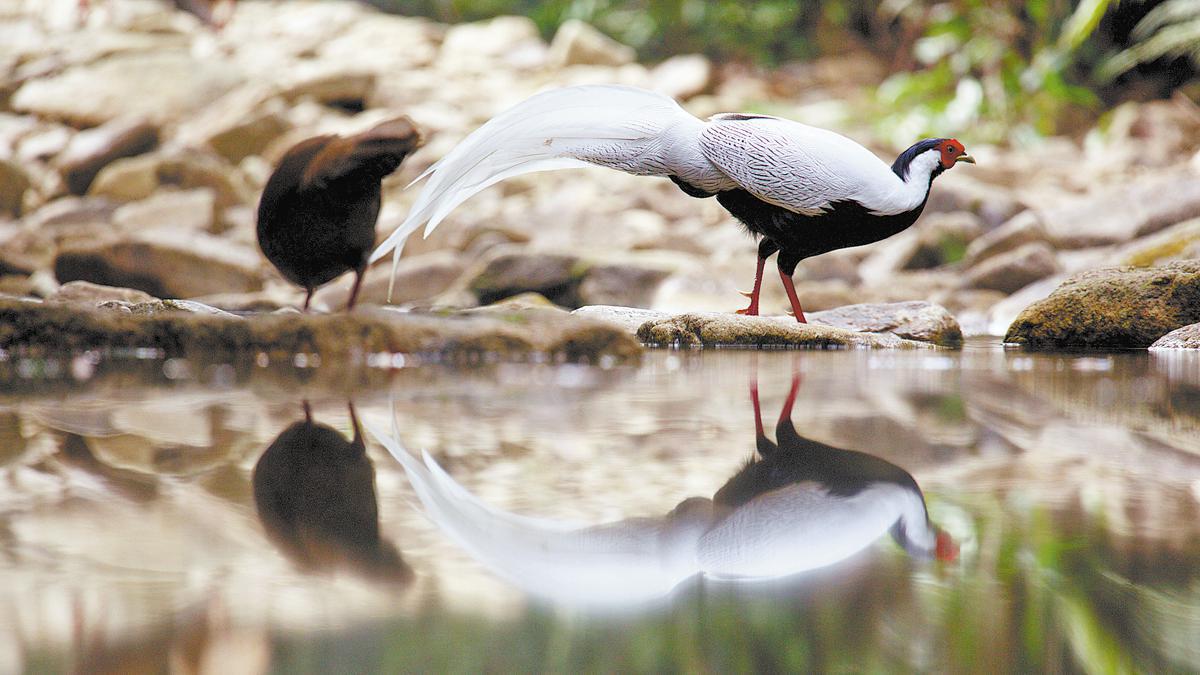
Driving to Beijing's Nanhaizi Park for a weekend outing, my family and I wanted to enjoy the beautiful scenery and visit the park's most famous resident, the milu deer. But our excursion did not go as planned. Instead of deer, we ended up seeing hundreds of wild geese and many other birds on the lake beach near the park's entrance.
The Nanhaizi Park was established to host the milu deer which once roamed in large numbers along the lower reaches of the Yellow and Yangtze rivers. However, by around 1900, the species had almost completely vanished from China, victims of better hunting weapons, shrinking habitats and the famines that plagued the region.
Fortunately, a few dozen milu deer survived, thanks to a British nobleman who had shipped a few deer to Britain where they were bred on his private estate. In the mid-1980s, as a gesture of friendship, 39 deer were sent back to China by the owner and the British government.
To give them a proper habitat as well as to promote wildlife protection, China established a special reserve in the wetlands of northern Jiangsu province. The reserve now hosts about 9,000 milu deer. A smaller group of the returned deer was settled in the southern suburbs of Beijing, in what is now Nanhaizi Park, where some 200 deer live today.
The milu's near extinction about 100 years ago and its present prosperity neatly frame China's difficult but determined journey in wildlife protection.
When I was a kid 60 years ago, sparrows, magpies, crows and pigeons were the only birds I saw. All other birds had fallen victim to hunting guns, nets and people suffering from hunger. My playmates and I used to shoot down sparrows with air rifles or slingshots. The harvest was roasted and shared among the group, with each person getting about half a sparrow.
Sparrows survived because they are small and provide very little meat. Magpies lived on because Chinese people believe they bring good luck and killing them is a bad omen. Crows, on the other hand, were seen by many as evil birds and we were advised to keep a distance from them. As for pigeons, they were largely home-raised and targeting them would invite retaliation from their owners.
Things began to change for the better after the Law of the People's Republic of China on the Protection of Wildlife came into force in 1989, just a few years after the reintroduction of the milu deer. The law has been revised several times since then, each amendment increasing the protection and tightening the enforcement measures. In 2024, the National Forestry and Grassland Administration announced that China now has 789 wildlife habitats, including those for milu deer, giant pandas, crested ibis and Siberian tigers.
My wife insists she once spotted a tiger while walking alone along the Wusuli River last year. Though I think she is kidding, I will not argue. Residents along the China-Russia border do come across tigers and black bears now and then.
When I came to Beijing 43 years ago, the capital's birdlife looked much like the birds I saw in my childhood. But now, a variety of species frequent my balcony where I leave rice, corn and water for them. Watching these beautiful birds from the window has become a daily routine for my family. Statistics released by the relevant administration say that there are now 620 species of wildlife in Beijing, with 527 of them being birds.
But there are challenges too. Reports of boars destroying farmland near the capital and wolves and foxes invading farmhouses for chicken and goats have become common. I look at these reports as good news, but only if people's safety is ensured and their losses sufficiently compensated by the government.
Back at the park, the geese at Shichahai were friendly to people. Smart enough to know that we are not hostile, some of them even came very close to take food from our palms. But the park officials were trying to persuade visitors not to feed the geese and other birds. "If you keep feeding them, they will not migrate to the warm south as destined. That will hurt them."
As wildlife lovers, we immediately stopped feeding them, wishing the birds a safe migration journey so that they come back to this friendly land next year.
The author is former deputy editor-in-chief of China Daily.
kangbing@chinadaily.com.cn