


Diving to discover details of distant past dependant on weather









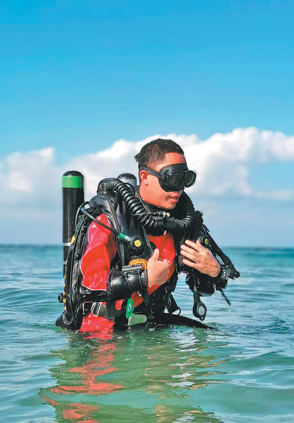
"We're just like the fishermen — we depend on the weather for our livelihood," said underwater archeologist Tseung Pak-long, staring at the calm sea, under which turbulent currents concealed the unpredictable nature of his work. He had journeyed nearly eight hours by high-speed train from Hong Kong to Fujian's Pingtan Island the previous day, intent on assisting with the training of an underwater archaeology class held there.
The period from May to November marks the typhoon season, with July to September being the peak months for tropical cyclones. Despite the risks, this window is the most suitable for underwater archaeology and research. "The temperature and seabed conditions are optimal during these months," Tseung said.
This time, as he left Hong Kong, Typhoon Wipha was racing across the ocean, prompting the Hong Kong Observatory to issue a No 10 hurricane signal warning — the highest level. He harbored a faint hope that Fujian, being farther from the storm's eye, would be spared the worst, but the gale that greeted him as he disembarked the train swiftly dispelled any illusions of calm.
The following day was without rain and even sunny, but Tseung's optimism was overshadowed by a deep-seated realism. "Good weather for our underwater operations does not refer to whether it's windy or rainy on land but to whether the ocean currents are mild and visibility is high beneath the waves," he said.
Diving operations are highly susceptible to weather conditions, and the safety of the archaeology team is paramount. Each dive must adhere to strict protocols, such as never diving without a partner and having clear limits on underwater time, range and workflow.
Pointing to the seemingly tranquil sea, Tseung explained that the calm was deceptive, nothing more than the eerie stillness before a storm. The passing typhoon was expected to bring widespread and intense ocean currents, making the waters beneath perilous and murky.
"We might not be able to dive,"Tseung said, accustomed to such letdowns. After all, for underwater archaeologists, even reaching the ocean floor and locating a shipwreck often doesn't guarantee finding artifacts. He likened underwater excavation to opening a mystery box — always unpredictable and consequently making each dive all the more precious.
In the evening, Tseung received word that the nearby sea had turned rough, compelling all vessels to return to a designated safe area, and the planned outing for the next day was called off.
"That's the norm. Life is like a box of chocolates," he said, accepting being at the mercy of nature.