


Saving the golden orchid
Scientist revels in growing rare, once-endangered species in the lab and replanting it in the wild, Li Yingxue reports.









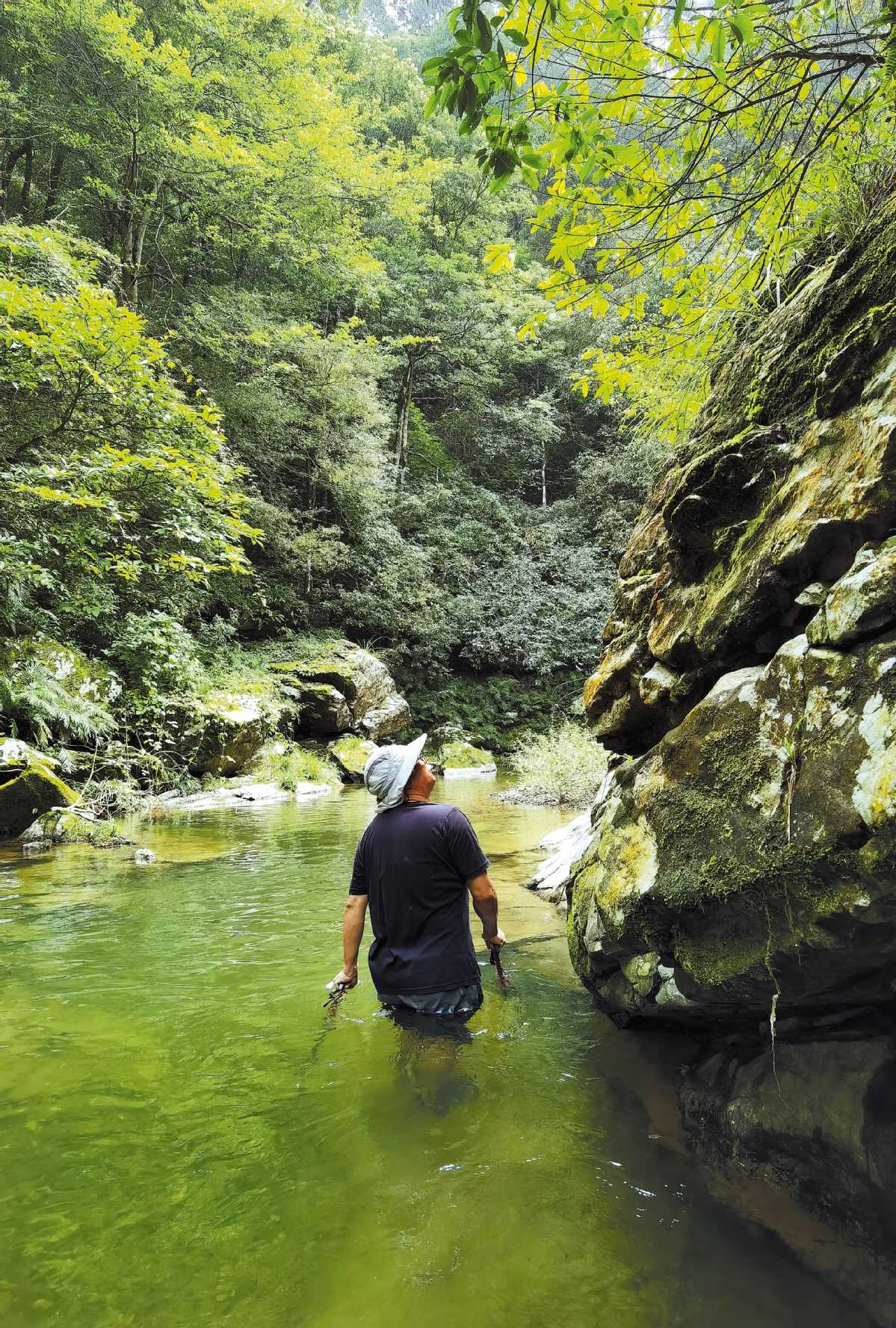
In April, as the mountains of Jiangxi Guanshan National Nature Reserve come alive with vibrant greenery and blooming wildflowers, one golden blossom quietly steals the show.
Professor Yang Baiyun from the School of Life Science at Nanchang University in Jiangxi province knows these hills well, as he visits often. But this time his journey has a singular purpose: to see a rare flower, golden and curled like a shrimp tail, blooming in the wild.
It's the Calanthe striata, a critically endangered orchid so elusive it's been dubbed the "golden snub-nosed monkey" of the plant world. In 2021, China's National Forestry and Grassland Administration reported fewer than 300 of these orchids remaining in the wild.
The one Yang came to see is special. It's not discovered by chance, but cultivated in his lab and carefully reintroduced to its natural habitat after years of work. Listed on the IUCN Red List of Threatened Species since 2004, the Calanthe striata is now beginning to take root again, thanks to Yang's team.
At 62, Yang has dedicated over three decades to studying orchids. He not only pushes scientific boundaries but also brings his knowledge to rural communities, helping farmers grow orchids and other valuable plants to boost their incomes. With one foot in the lab and the other in the fields, he's known as "half scientist, half farmer".





- Arab League delegation visits China-Arab Research Center on Reform and Development for 10th anniversary
- Shanghai Jiao Tong University launches Center for Studies of Global South Sustainable Development
- Ex-CNNC general manager faces disciplinary probe
- China launches long march 12 rocket, deploys satellites for expanding space network
- Global gathering transforms Yixing village into youth hub
- China's prosecutors intensify crackdown on crime, charge 1.27 million in first 11 months of 2025