



Don't pollute with light









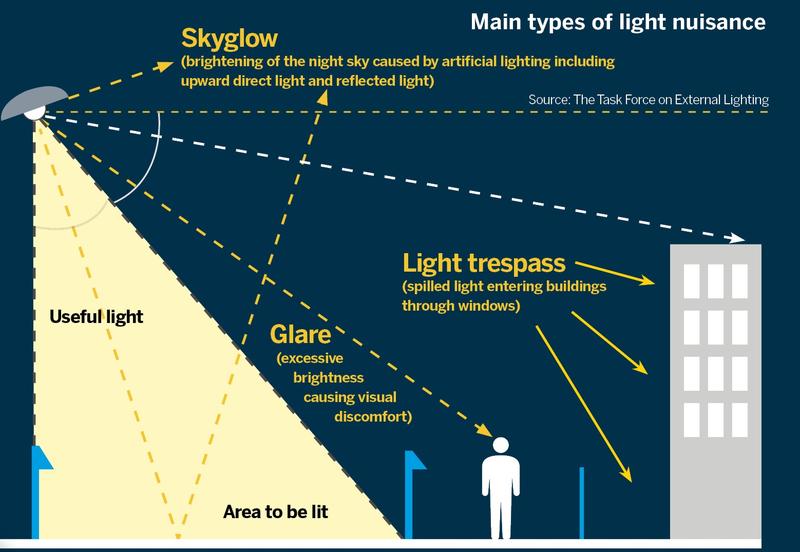
Lighting review
Jason Pun Chun-shing, principal lecturer at the University of Hong Kong's Department of Physics, urged a review of the city's excessive light pollution. Pun, who monitored Hong Kong's night brightness for over a decade, said the artificial lights along Victoria Harbor are as powerful as moonlight, leaving no "complete dark place" for astronomic observation or stargazing.
Despite the excessive brightness and increasing complaints, Pun said there has been hardly any research into the impact of Hong Kong's light pollution. Ongoing overseas studies confirm light pollution's adverse effects on human health and the ecosystem. He is concerned about Hong Kong's situation.
Pun recalled that the Dark Sky conservation concept emerged in Hong Kong a decade ago — an Astropark was opened at Sai Kung in 2010. But the scale and function fell far short of expectations, and it was not developed further.
The Environment Bureau launched the Charter on External Lighting in 2016 as the most promising voluntary agreement in recent years, encouraging downtown business owners to switch off unnecessary lighting at night. It was signed by 5000 business owners.
Pun observed that the protection zone initiatives adopted by nearby cities are more proactive. The pandemic dimmed Hong Kong's lighting to some degree. He hopes the positive experience of less light pollution can prompt the restart of Dark Sky conservation.





- Arab League delegation visits China-Arab Research Center on Reform and Development for 10th anniversary
- Shanghai Jiao Tong University launches Center for Studies of Global South Sustainable Development
- Ex-CNNC general manager faces disciplinary probe
- China launches long march 12 rocket, deploys satellites for expanding space network
- Global gathering transforms Yixing village into youth hub
- China's prosecutors intensify crackdown on crime, charge 1.27 million in first 11 months of 2025