



Less surface ozone could significantly increase wheat yield: Study









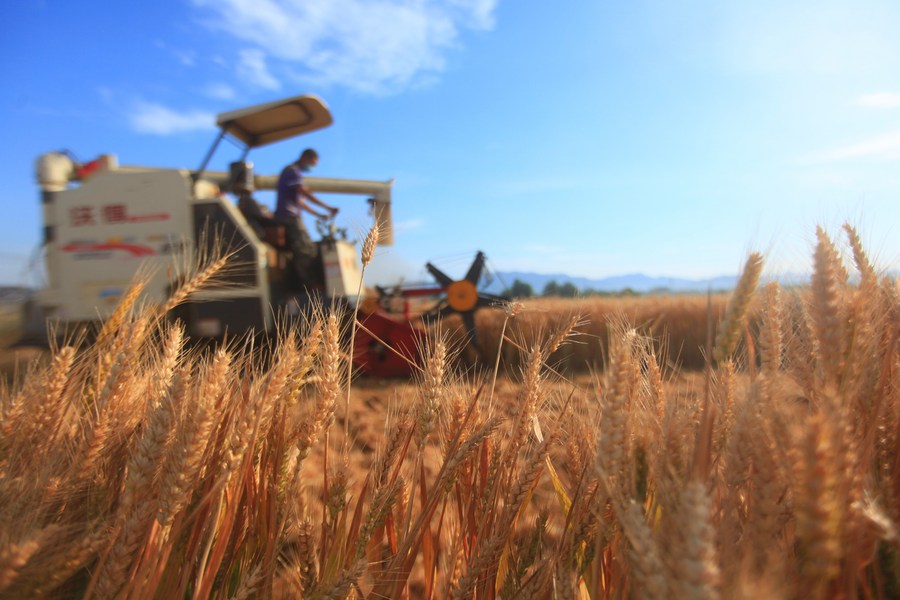
BEIJING -- Chinese researchers have discovered that halving ozone dose could increase wheat yields by more than 20 percent, the Science and Technology Daily reported Thursday.
The climbing concentration of surface ozone pollution hinders crop growth and reduces yields, according to the report.
The researchers from the Nanjing University of Information Science and Technology worked in cooperation with nine other institutions to assess the relative yield loss in rice, wheat and maize due to ozone, by combining the ozone elevation experiments across Asia and air monitoring at about 3,000 locations in China, Japan and the Republic of Korea.
They found that the total ozone-induced annual loss of crop production is estimated at $63 billion in East Asia, according to a recent research article published in the journal Nature Food.
More specifically, the yields of wheat, rice and maize could be improved by 21 percent, 10 percent and 4 percent respectively in China, if the ozone were reduced half with emission reduction measures.
The researchers suggested taking mitigation action for ozone emission control and adaptive agronomic measures against the rising surface ozone levels across East Asia.





- Nation gears up for Spring Festival rush
- China, Philippines to keep talks open on maritime affairs
- AI governance tops China’s 2025 technology buzzwords list
- China-Swiss exhibition on green construction opens
- China says navy, coast guard are peace guardians
- Hunan scholar donates 104 artifacts documenting Japanese aggression