


New Sino-US ties 'key to global interests'









The West's intense response to Hong Kong's National Security Law is but one part of a geopolitical strategy to contain China's growing economic power and influence, scholars and political advisers said.
The experts cautioned that when nations adopt a strategy of turning up the heat and intensifying confrontation, everybody loses in the tensions of a battered global economy. And it means that nations will face even greater challenges when working together to deal with global crises.
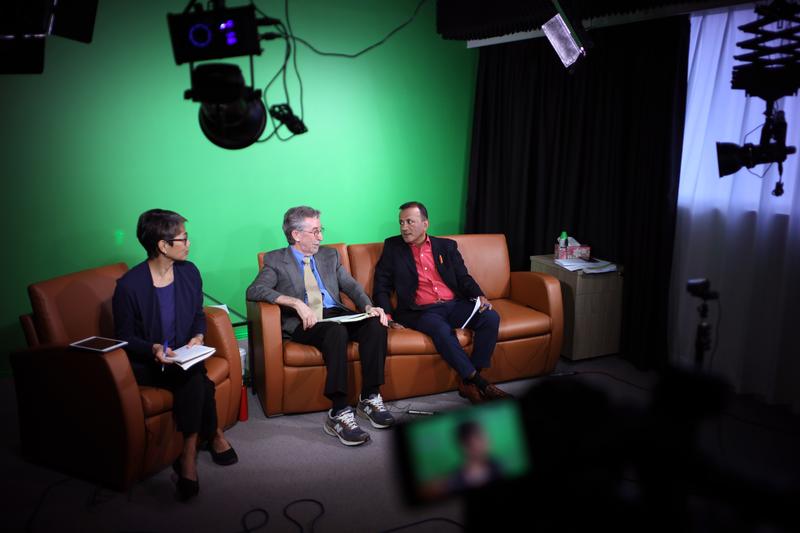
That stakeholders have to forge new cooperation and new rules of engagement to prevent a lose-lose result for everyone was the consensus on the sidelines of China Daily's "National Security Law and China's Hong Kong" webinar on Friday.
Richard Cullen, a veteran legal expert from Australia, sees the rising tensions and the sanctioning of Hong Kong over the National Security Law within the framework of "a new Cold War".
Cullen, a visiting professor at the University of Hong Kong's Faculty of Law, said some Western countries are intent on frightening people about Chinese influence, spreading Sinophobia among global communities.
'A new Cold War'
The enactment of the National Security Law on June 30 has met with opposition and condemnation from some Western nations led by the US. Hong Kong has seen its favored trading status revoked by the United States and replaced with economic sanctions.
Cullen cited the opinion of economist Huang Yukon, who contends that the West, led by the US, is turning the relationship with China into a zero-sum game — which America is determined to win and that "China must lose".
"Win-win just is no longer in the American vocabulary when they talk about China," Cullen said.
Chandran Nair, a Malaysian business leader, told China Daily that the true colors of the Western alliances have gradually emerged within this present-day climate.
"The masks have been taken off the pretext that the Western liberal order essentially is willing to co-exist with the rest (of the world). It (the West) is not willing," said Nair, founder and CEO of Global Institute for Tomorrow, a Hong Kong-based think tank.





- Arab League delegation visits China-Arab Research Center on Reform and Development for 10th anniversary
- Shanghai Jiao Tong University launches Center for Studies of Global South Sustainable Development
- Ex-CNNC general manager faces disciplinary probe
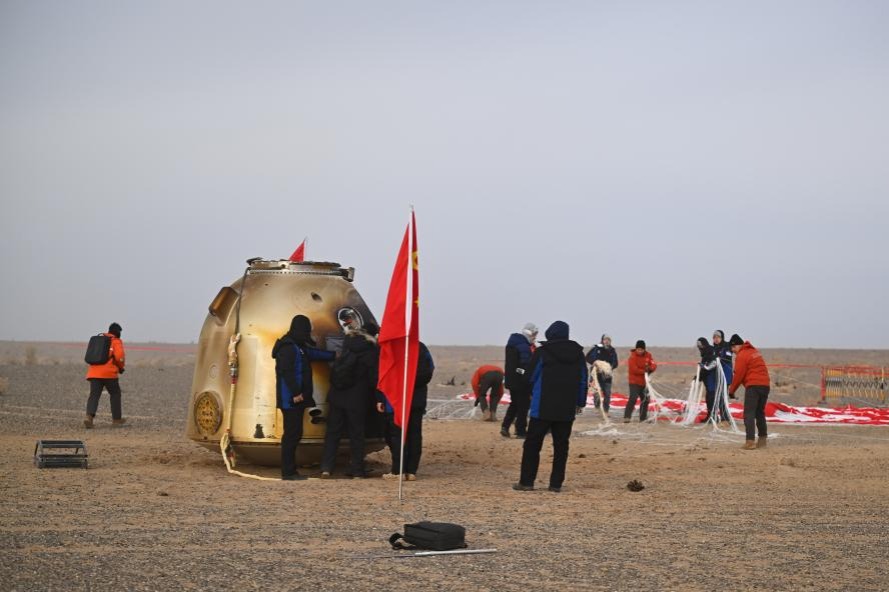
- China launches long march 12 rocket, deploys satellites for expanding space network
- Global gathering transforms Yixing village into youth hub
- China's prosecutors intensify crackdown on crime, charge 1.27 million in first 11 months of 2025