



China to strengthen public health emergency response system: official









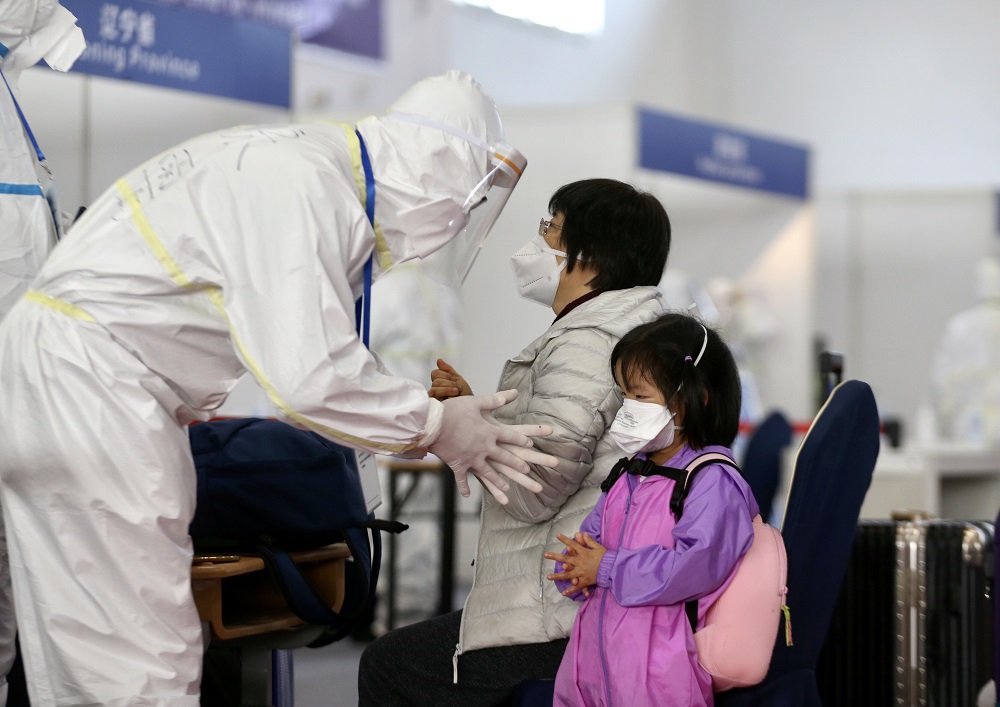
BEIJING -- China will further strengthen its public health emergency response system, as some areas of weakness have been exposed in coping with the COVID-19 epidemic, a health official said on Saturday.
Li Bin, deputy head of the National Health Commission, told a press conference that more efforts will be made in emphasizing prevention, supporting both traditional Chinese medicine and Western medicine and combining routine practices and actual emergency responses.
People's awareness of preventing public health emergencies should be raised, and a unified and efficient leadership and command system on the public health emergency response should be established, Li said.
The official stressed reforming and improving disease prevention and control system, focusing on preventing and controlling major contagions and dealing with public health emergencies, while stepping up training and drills as well as building up a tiered treatment mechanism.
The application of digital technologies including big data, artificial intelligence, and cloud computing should be encouraged in areas such as epidemic monitoring, tracing virus sources, epidemic prevention and treatment, and resource allocation, Li said, noting that TCM should also be given full play in treatment.
Li also underlined the importance of improving the medical insurance and medical aid systems for major diseases and strengthening laws and regulations on public health.
International exchanges and cooperation should be enhanced, including China's active participation in global health governance and experience sharing, Li said.




- Chinese researchers develop capsule-sized self-powered micro pacemaker
- NW China's Gansu hit by 5.5-magnitude quake, no casualties reported
- Chinese research report draws roadmap for development of high-temperature superconducting materials
- Direct high-speed trains now connect Beijing with Xiong'an
- Shing-Tung Yau: We aim to cultivate interdisciplinary talent
- Nobel laureate inspires students in Beijing: the 'Goldbach's conjecture' of life sciences