



Cloned cat brings real comfort to its owner









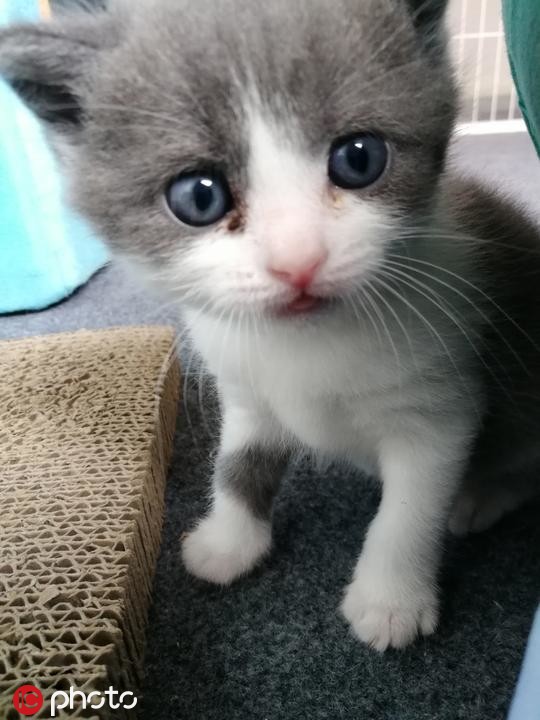
"I had already buried the cat by that time," Huang said. "Thanks to the cold weather in winter, the body was relatively well preserved."
He wrapped the exhumed cat's body in a wet towel and placed it in the refrigerator, as instructed by Sinogene. The next morning, the company extracted tissue beneath the skin of its thigh to retrieve cells for cloning.
Shi Zhensheng, a member of the Chinese Association of Animal Science and Veterinary Medicine, said cloning a cat was not easy.
"Cats are different from most animals as they cannot ovulate spontaneously, which adds to the difficulties during the cloning process," he said. "The cultivation of the cloned cat is one of the few successful cases in the world, marking a major step for China in this field."
Sinogene charges 250,000 yuan ($35,400) to clone a cat and 380,000 yuan for a dog.
"My family doesn't understand why I insisted on spending so much money on cloning a cat. But it provided me with a chance to ease my pain," Huang said, adding that he can't wait to take Dasuan home in October.
Zhao said Sinogene was interested in exploring the possibility of transferring memories to cloned pets if such technology ever became available.





- China's Global Governance Initiative receives positive feedback at forum
- China's Xizang sees steady tourism growth in 2025
- First-of-its-kind pearl auction held utilizing Hainan FTP
- Agarwood exhibition steeps Shanghai museum in fragrance
- The Fujian Coast Guard conducts regular law enforcement patrol in the waters near Jinmen
- IP protection for new fields to improve