



Shenzhen at the heart of China’s early reform and opening-up









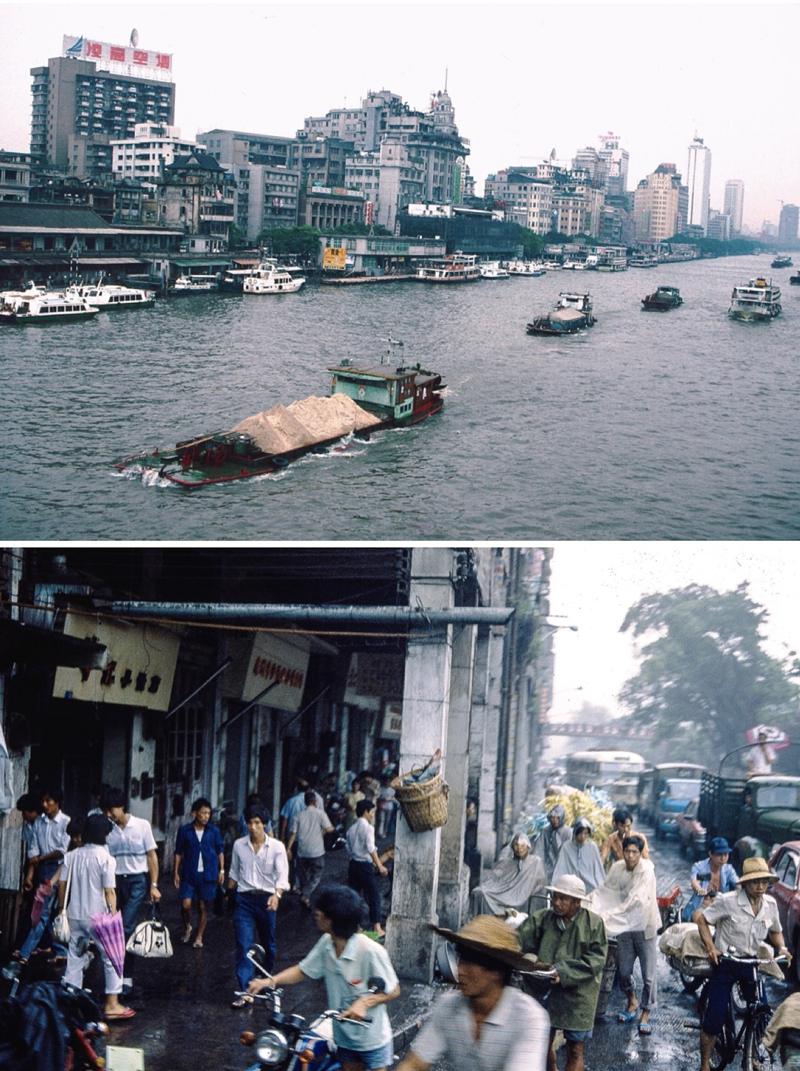
It rained a lot in Hong Kong and I spent considerable time in cafes mentally going back over my journey while thinking about what stood out for me. Shenzhen! Within my mind I knew there was something really significant going on. Asked regularly to give talks in Scotland about my experiences, I would finish by mentioning Shenzhen, suggesting that people watch what was happening there. Again, few seemed aware of the structural reforms that China had embarked on. A program of massive change with Shenzhen, the Pearl River Delta and surrounding coastal areas as the catalyst was underway.
Five years later, 1992, returning to Guangzhou again by train, the landscape was in flux. While there were still duck farms and rice fields, factories, some being "joint venture" had opened or were under construction, new roads were being pushed through the reddish tropical soil, modern tiled homes were appearing within the surviving villages. Guangzhou was also, in many ways, a city in transition. I had arrived shortly after Deng Xiaoping's historic visit to Guangdong in 1992, seen as an encouragement for the reforms then underway, reforms that initially brought with them many challenges.
During my stay in Guangzhou I regularly visited and stayed in Shenzhen, and as always, walked around to observe the changes. Named after the last station on the former Kowloon-Canton Railway, before the Hong Kong crossing, Shenzhen was made a city in 1979. There had been a market town and several fishing villages in the area with the earliest recorded mention of name Shenzhen dating from 1410 during the Ming Dynasty. Its railway station opened in 1911, relocating to its present location close to Hong Kong's Lo Wu in 1950, the present large terminal opening in 1991. More recently several large stations have been constructed to serve the growth of high-speed rail services, connecting directly with both Hong Kong and cities nationwide.





