



Embryo dilemma after 30 years' development of test tube babies









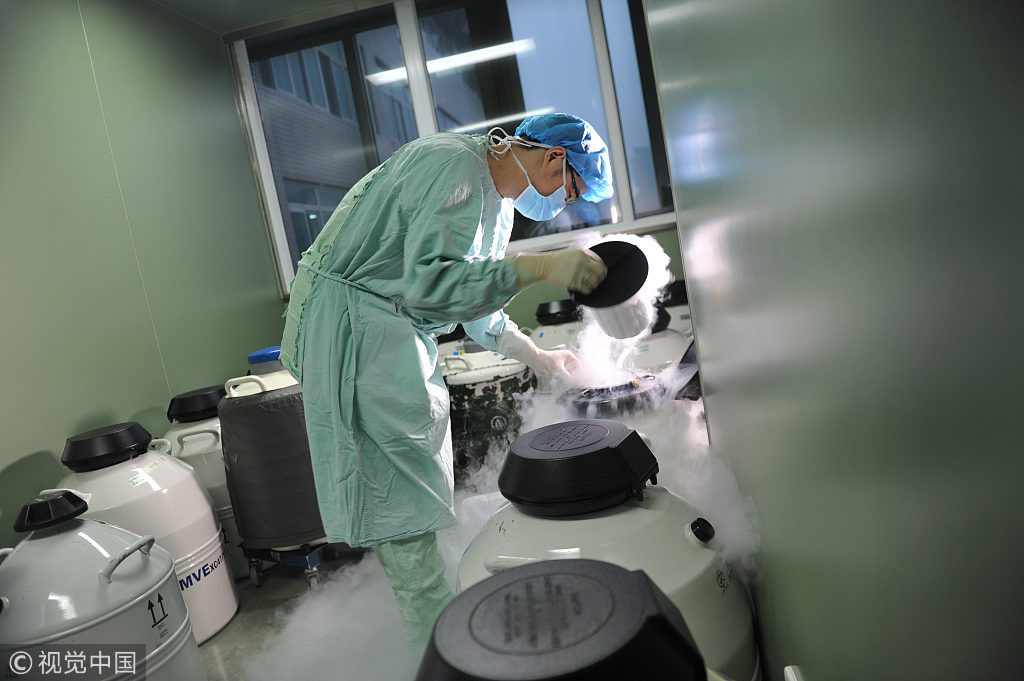
Data shows that the number of frozen embryos passed 10,000 several years ago in some city, of which 60 percent are ownerless.
"The law doesn't make clear whether embryos are human being or not. Though the hospital has signed contract with patients about discarding leftover embryos, it can face serious consequences if the law defines embryos as human being one day," said Yu.
"As long as the contract is signed based on two sides' true intentions, hospitals don't have to bear legal liability if they follow the contract," said Zhu Hu, associate professor with law school of Renmin University of China.
But Zhu believes the current contracts are too simple because many circumstances were not included in the contracts. For example, what if the couple divorces or one spouse dies, or the spouses have different opinion on how to deal with leftover embryos.
The best way is for the medical and law industries to co-produce a thorough contract model and hospitals do some adjustments due to their situation, said Zhu.






- Arab League delegation visits China-Arab Research Center on Reform and Development for 10th anniversary
- Shanghai Jiao Tong University launches Center for Studies of Global South Sustainable Development
- Ex-CNNC general manager faces disciplinary probe
- China launches long march 12 rocket, deploys satellites for expanding space network
- Global gathering transforms Yixing village into youth hub
- China's prosecutors intensify crackdown on crime, charge 1.27 million in first 11 months of 2025