


M2 not the only money supply indicator, says PBOC









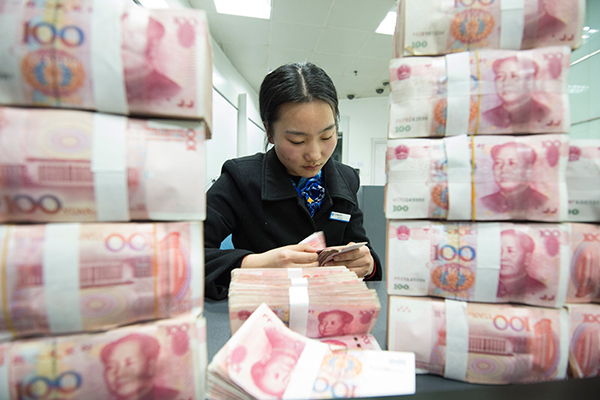
The broad measure of money supply, or M2, should not be the only indicator for understanding China's liquidity conditions, said Zhou Xiaochuan, central bank governor, on Friday.
By the end of 2017, China's M2 growth was 8.2 percent, below the nominal year-on-year GDP growth of 8.5 percent, triggering concerns over inadequate liquidity to bolster normal economic growth.
"China's M2 growth is slightly lower than nominal GDP growth, but we should monitor more indicators, such as prices and jobs, to see whether liquidity is tight," he said at a press conference during the ongoing first session of the 13th National People's Congress.
There is no one simple indicator to judge the conditions of money supply, he said. "It is a quite complex issue and multiple factors should be taken into consideration."
China's consumer price index grew by 1.6 percent year-on-year in 2017, well below the inflation target of 3 percent, and its unemployment rates, in terms of both registered and surveyed unemployment rate, were low, statistics of the National Bureau of Statistics show.





- Arab League delegation visits China-Arab Research Center on Reform and Development for 10th anniversary
- Shanghai Jiao Tong University launches Center for Studies of Global South Sustainable Development
- Ex-CNNC general manager faces disciplinary probe
- China launches long march 12 rocket, deploys satellites for expanding space network
- Global gathering transforms Yixing village into youth hub
- China's prosecutors intensify crackdown on crime, charge 1.27 million in first 11 months of 2025