


Canadian PM's rallying cry at Davos assails global 'rupture'










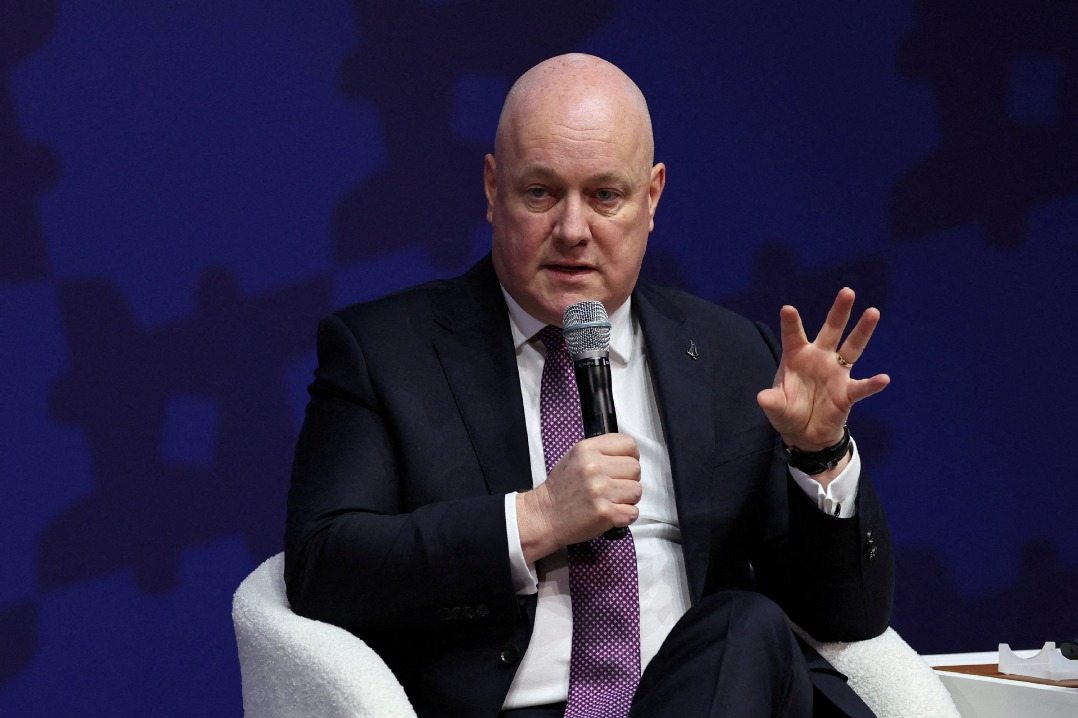
The world has ushered in 2026 amid an intensified weaponization of tariffs, further upending an already fragile geopolitical and economic order. At this year's World Economic Forum meeting in Davos, Switzerland, Canadian Prime Minister Mark Carney aptly described the world order as being "in the midst of a rupture, not a transition".
He also acknowledged that recently, "great powers began using economic integration as weapons. Tariffs as leverage. Financial infrastructure as coercion. Supply chains as vulnerabilities to be exploited. You cannot live within the lie of mutual benefit through integration when integration becomes the source of your subordination."
Widely regarded as among the sharpest remarks ever delivered by a Western leader against the prevailing "rules-based order", Carney went further, laying bare an uncomfortable reality: Although for decades, countries like Canada prospered under the rules-based international order, "we knew the story of the international rules-based order was partially false. That the strongest would exempt themselves when convenient. That trade rules were enforced asymmetrically. And that international law applied with varying rigor depending on the identity of the accused or the victim".
This critique found resonance in the position articulated by China's Vice-Premier He Lifeng, who was also in attendance at Davos. He reiterated Beijing's long-held stance that "everyone should be equal before the rules", emphasizing that a very small number of countries must not be allowed the privilege of pursuing narrow self-interest.
The vice-premier cautioned against a regression to the "law of the jungle, where the strong prey on the weak".
He also pledged that China would be a trading partner to all countries rather than an adversary, and that China's development should be viewed as an opportunity for — not a threat to — global economic growth.
Yet on the same rostrum, the collective West appeared consumed by the White House's unveiled threats to take control of Greenland. The United States administration's threat to impose retaliatory tariffs on transatlantic allies opposing such a move was widely seen in Europe as naked intimidation. French President Emmanuel Macron did not mince words, denouncing it as "a new colonial approach" and calling for firm rejection of the "law of the strongest".
That said, beyond Macron's rhetorical preference for "respect over bullies" and "the rule of law over brutality", his core grievance lay elsewhere. His primary concern was not the breach of free-trade principles per se, but the legitimacy of tariffing allies. The real bone of contention, it seemed, was that allies are being tariffed rather than free trade rules are being violated.
As Europe grapples with the precarious task of recalibrating its relationship with Washington, Carney appears far more unambiguous in seeking a new global trading order — one that delivers greater economic stability and predictability for Canada.
Carney recognized that "if great powers abandon even the pretense of rules and values for the unhindered pursuit of their power and interests, the gains from transactionalism will become harder to replicate". Furthermore, he said that "hegemons cannot continually monetize their relationships" and "allies will diversify to hedge against uncertainty".
Thus, the Canadian prime minister is pushing trade diversification further than many of his European counterparts. The recent thaw in Sino-Canadian relations, marked by the arrangements made between the two countries to properly address their economic and trade issues, which were set to strengthen bilateral economic cooperation, is a case in point.
Alongside this push, Canada seems intent on positioning itself as a potential leader in shaping a new global trading order — despite the enduring reality that its economic dependency remains overwhelmingly tethered to its southern neighbor, the US.
In the face of such an order, do the defiant remarks now being voiced by Western allies against US hegemony signal a genuine era of reckoning and reflection? Or are they merely a temporary blip in the long trajectory of Pax Americana? The answer will ultimately rest on the political will — and resolve — of leaders on the world stage.
The author is president of the Belt and Road Initiative Caucus for Asia Pacific.
The views do not necessarily reflect those of China Daily.