


A cold dance of survival










Nourishing tradition
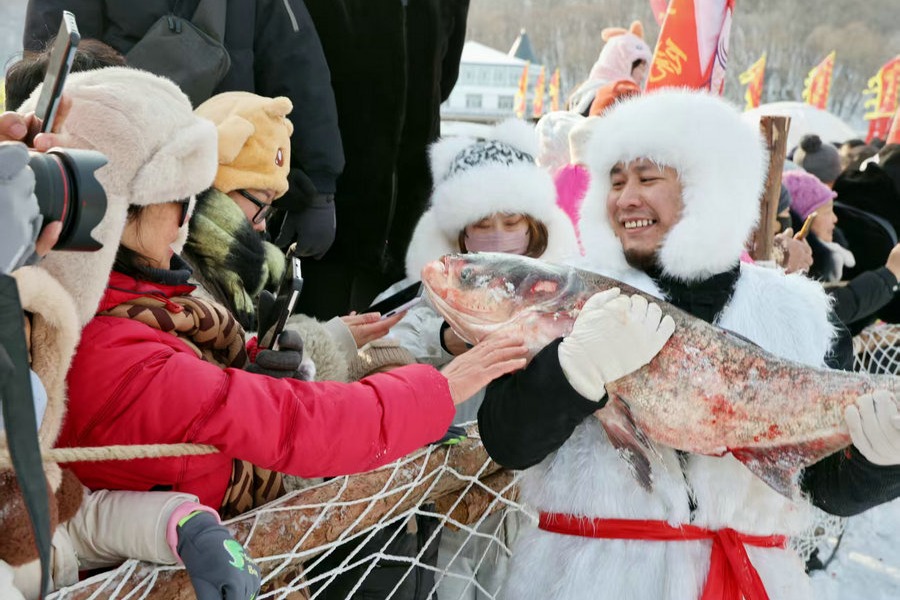
Cabins answer how to subsist. Cuisine answers on what.
Hemu's cultural evolution was compelled by a harsh climate that tempered traditions in a forge not of fire but of frost.
Yet flames answer the riddles of scarcity posed by the stomach. Hot meals are extracted from the land's basic yields — meat, dairy, redskinned potatoes and grain.
Hunks of beef, horse meat and mutton sizzle on skewers and simmer in stews and soups.
Boiled meat serves as the basis for communal bowls of beshbarmak — called "five fingers", since it's eaten without utensils — served over noodles doused in a rich broth and sprinkled with crumbles of a dried cow or goat cheese called kurt.
Suyou, kumis and its camel-milk corollary, shubat, are rich beverages that make drinking a vital source of calories in this nutrient-deprived terrain.
Hemu's people haven't conquered the cold wilderness but instead coexist with it.
To dwell in this taiga is to dance nimbly atop the weight of a thousand winters, to move in tune with their hushed melodies with patience, skill and grace.
It's a choreography learned over millennia — in the glide of skis, the stomp of boots and the swish of dogsled blades — to set in motion a song of survival that spans seasons, centuries and spirit.