


Innovation should be new growth driver









Editor's note: Huang Hanquan, head of the Chinese Academy of Macroeconomic Research, spoke with China Economic Times about what is needed to promote scientific and technological innovation in China. Below are excerpts of the interview. The views don't necessarily represent those of China Daily.
China's economy is at a critical stage in its transition from old to new growth drivers. The real estate sector used to serve as a major engine driving China's growth, linking the economic activities of households, companies, local governments and banks in a mutually reinforcing cycle of investment and consumption.
However, in recent years, amid the ongoing adjustment of the real estate industry, the driving force of this growth engine has gradually weakened. Therefore, there is an urgent need to build a new growth engine that is powered by scientific and technological innovation.
The development of this new growth engine requires effective integration of innovation, industrial upgrading and financial development.
Industries play a central role in converting scientific and technological achievements into productive capacity and in guiding the optimal allocation of financial resources.
The financial sector, meanwhile, provides essential support. A thriving capital market is needed to let both entrepreneurs and investors share the returns from scientific and technological innovation, thereby attracting sustained investment for progress in technological innovation.
Addressing the mismatch between finance and innovation is a crucial task. It is necessary to develop a multi-tiered financial service system which is tailored to the needs of innovative enterprises. This includes expanding the pool of patient capital and encouraging investors to make long-term financial commitments in newly launched and small-sized high-technology projects.
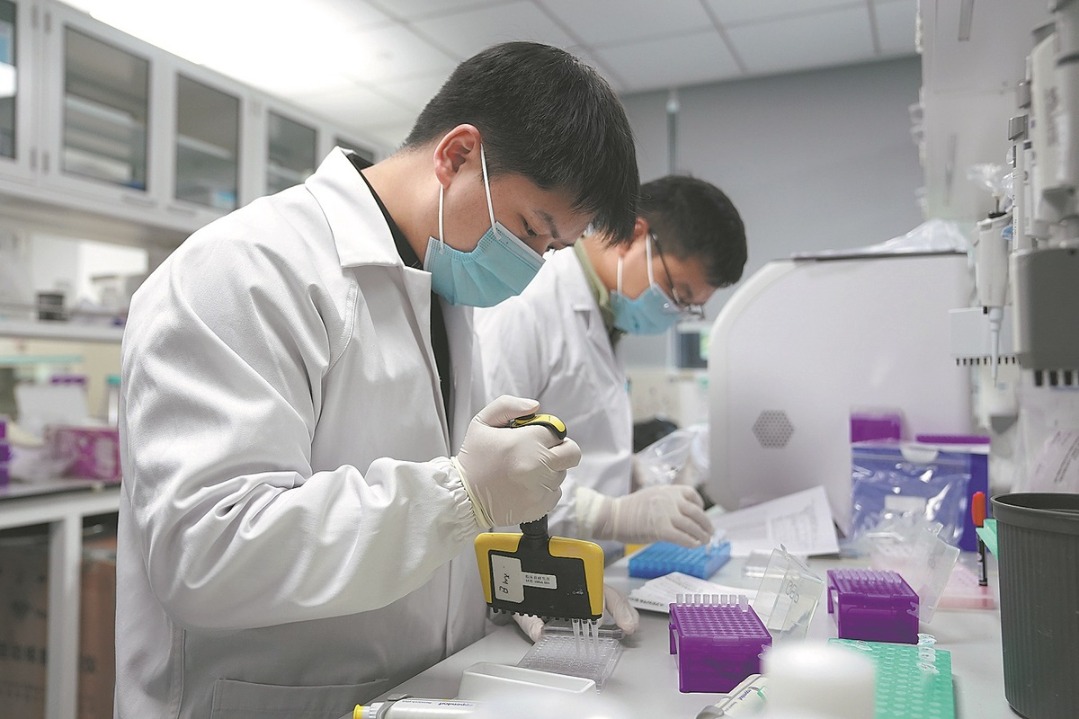
More efforts are needed to consolidate the role of companies as major players in scientific and technological innovation. They should be encouraged to make decisions on innovation, invest in research and development and accelerate the commercialization of research outcomes.
This requires an environment of fair competition, where State-owned, private and foreign-funded companies are all treated as equals and enjoy the same access to the markets and other resources. Meanwhile, protection of intellectual property should be strengthened, and inclusive and prudent regulation of start-up technology companies should be adopted.
The country needs to build a system to facilitate efficient technology transfer and ensure that innovation outcomes and the needs of industries are matched. Companies should be encouraged to develop innovation strategies according to market demand, and professional institutions should form a "bridge" between universities, research institutes and companies. More importantly, the quality of innovation should be further improved to ensure research and development efforts target what industries and the market really need.
Different regions in the country should adopt different measures to drive innovation. Those with abundant innovation resources, such as Beijing, Shanghai and the Guangdong-Hong Kong-Macao Greater Bay Area, should pursue cutting-edge, original and disruptive innovation across multiple fields.
The central and western regions should leverage their own distinctive industries and focus their resources on research to make breakthroughs in niche sectors.
Counties and third- and fourth-tier cities should create diverse scenarios for applying cutting-edge technologies while taking into account the local resources and industries. They should use the technologies to foster new industries or transform traditional ones.