


The core principles of "purity" (qing) and "offering" (gong) were established: offerings had to be intact, fresh and free from blemishes, and their arrangement had to follow a strict hierarchical order to demonstrate sincere reverence. At this stage, qinggong served a purely practical sacrificial purpose, with no aesthetic connotations — its sole aim was to convey piety to the divine and the ancestors.
From the Qin (221-206 BC) and Han (206 BC-AD 220) dynasties through the Wei, Jin, Southern and Northern dynasties (AD 220-598), qinggong underwent significant development, influenced by the rise of religion and the involvement of scholars.
Taoism incorporated qinggong into its blessing rituals, advocating offerings of clear wine, fresh fruits and vegetarian food to immortals, emphasizing that "purity signifies a mind free of distractions, and offering signifies sincere intent".
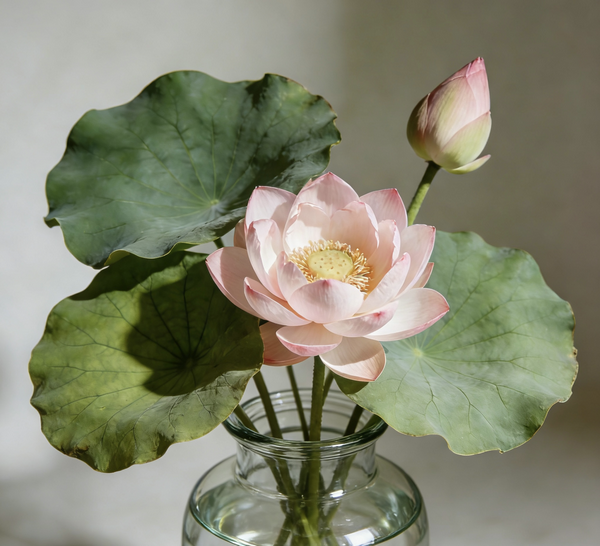
The introduction of Buddhism further enriched qinggong, bringing the tradition of offering flowers, pure water, lamps and incense to Buddhas. The Buddhist emphasis on non-violence and purity perfectly aligned with qinggong's core value of "cleanliness", popularizing flowers like lotus and daffodil as symbolic offerings of purity.





