


Embracing silence: A welcome step for railway travel









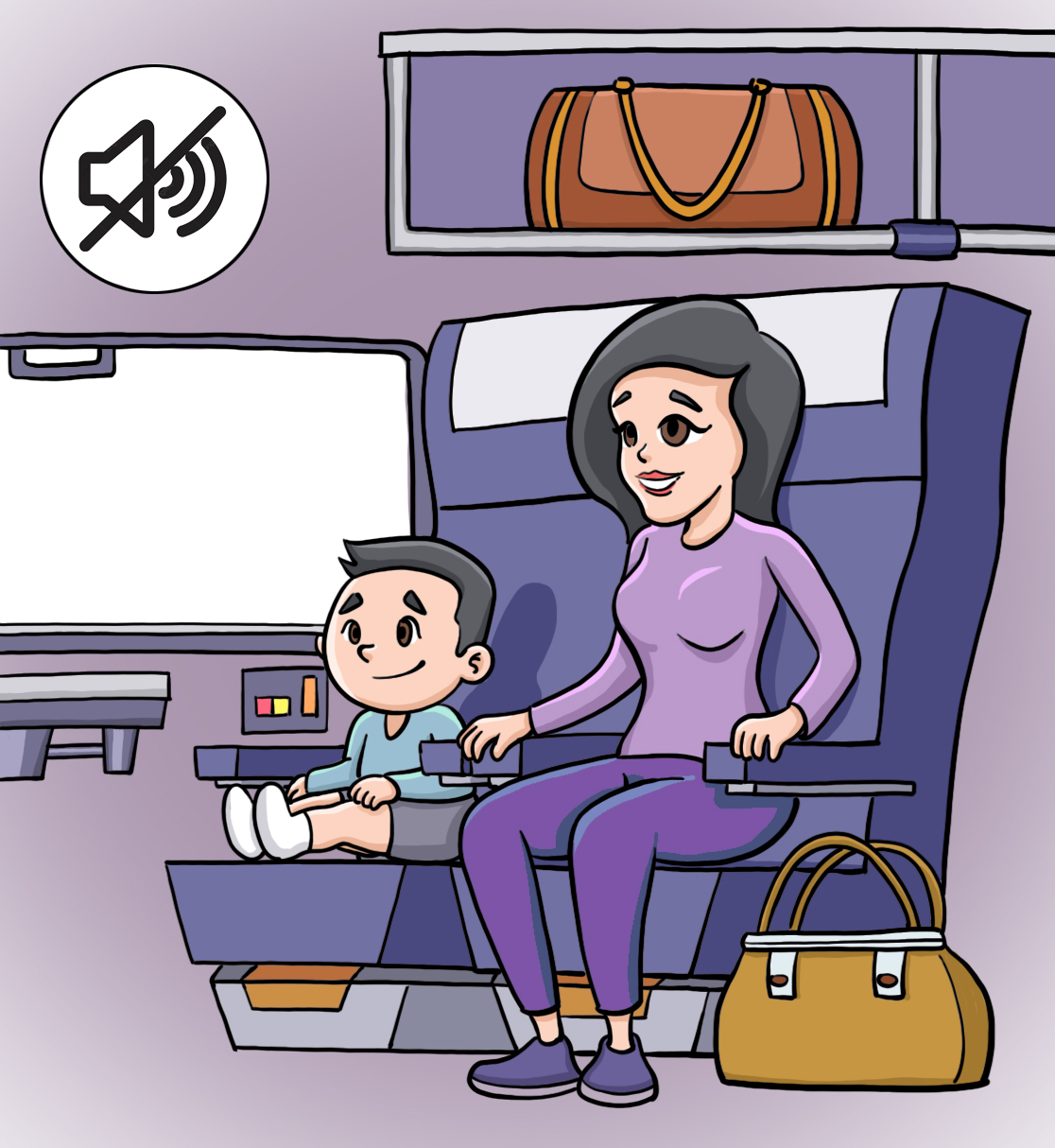
The announcement that China's railway network will significantly expand its "quiet carriage" service beginning February 1 is a modest reform with huge significance. By extending this option to nearly all "D" and "G" series high-speed trains, China State Railway Group is doing more than adding a new ticketing choice. It is acknowledging a subtle but important shift in public expectations: that modern travel should not only be fast and efficient, but also humane, considerate, and respectful of personal space.
In an era when mobility has become routine and speed is often taken for granted, comfort is increasingly defined not by plush seats or flashy amenities, but by atmosphere. Noise — consistent phone calls, blaring videos, loud conversations — has become one of the most common sources of friction in public transport. The quiet carriage is a direct response to this reality. It recognizes that many passengers wish to read, work, rest, or simply think during their journey, and that silence itself can be a valuable public good.
The idea is not new. Since its pilot launch in late 2020, the quiet carriage has steadily built a loyal following. Its popularity has sent a clear message: there is real demand for differentiated services that respect varying travel needs. Some passengers enjoy lively conversation; others treasure calm. A mature public transport system should accommodate both. The decision to scale up the quiet carriage nationwide reflects a service philosophy that takes passengers seriously — not as a homogeneous mass, but as individuals with different rhythms, purposes, and sensitivities.
This expansion also signals growing confidence in social self-regulation. Unlike rigid enforcement measures, the quiet carriage relies primarily on voluntary compliance. Passengers who book seats in these carriages must agree to a "quiet agreement", pledging to keep noise to a minimum, silence electronic devices, and avoid disruptive behavior. This is not merely a procedural step in the booking process. It is an experiment in trust — an assumption that citizens, when clearly informed and respectfully guided, are capable of regulating their own conduct.
Whether this experiment succeeds, however, will depend less on policy design than on everyday behavior. Rules can define expectations, but they cannot manufacture courtesy. The quiet carriage works only if passengers internalize its spirit rather than treat it as an inconvenience imposed from above. Silence, after all, is not enforced by signs alone; it is sustained by mutual awareness and restraint.
In this sense, each train becomes a small, moving society. Strangers share a confined space for hours at a time, connected only by destination and timetable. How they behave toward one another reveals much about the broader social climate. Choosing to speak softly, using headphones instead of speakers, stepping into the vestibule to take a call — these are small acts, but they reflect an understanding that public space is shared space. One person's freedom to speak loudly ends where another's need for quiet begins.
This is especially relevant in a fast-paced, digitally saturated society. Smartphones have blurred the boundary between private and public. What once would have been a personal conversation held at home is now broadcast on a train carriage. Videos once watched in solitude are now played aloud in crowded spaces. The quiet carriage is, in this context, a gentle corrective. It does not reject technology, but it insists that convenience should be balanced with consideration.
Parents, too, play an important role. Children are naturally energetic and expressive, and no one expects absolute silence from them. But guiding a child to speak softly, explaining why others may be resting or working, is itself a lesson in social responsibility. These moments of guidance shape habits that last far beyond a single journey. In this way, the quiet carriage becomes an informal classroom for civic behavior.
Such norms are closely tied to the broader concept of spiritual civilization. Civility is not an abstract slogan; it is practiced in concrete settings—on platforms, in lines, in carriages. A society that values harmony does not eliminate difference, but manages it through mutual respect. Silence, when voluntarily observed, is not repression. It is a form of empathy: the recognition that others' needs matter as much as one's own.
Critics may argue that quiet carriages risk creating unnecessary divisions or that they are difficult to enforce. But this misses the point. The purpose is not segregation, but choice. No one is compelled to sit in a quiet carriage. Those who prefer a more relaxed sound environment have ample alternatives. What matters is that those who actively choose silence can reasonably expect it to be honored.
The benefits are tangible. A calmer travel environment reduces stress, improves concentration, and makes long journeys feel shorter. For business travelers, it offers a mobile workspace. For elderly passengers, it provides a more restful experience. For everyone, it sets a tone of mutual regard that can subtly influence behavior even beyond the designated carriage.
Passengers therefore have both an opportunity and a responsibility. When booking a ticket, selecting the quiet option is a vote for a certain kind of public culture. Once on board, honoring the agreement is a test of integrity. It asks a simple question: can we align our actions with our choices? Each journey answers that question anew.
Ultimately, the expansion of quiet carriages is not about silence alone. It is about trust — between institutions and citizens, and among passengers themselves. It reflects confidence that society is ready for more refined forms of coexistence, where comfort is achieved not through constant supervision, but through shared understanding.
If embraced sincerely, the quiet carriage can become more than a railway feature. It can serve as a small but meaningful symbol of a society that is learning to slow down when necessary, to listen when appropriate, and to respect the invisible boundaries that make collective life possible. The infrastructure has been put in place. What remains is for passengers to fill it with the quiet dignity it was designed to protect.
Let every quiet carriage stand as a reminder that civility is not enforced by volume, but sustained by restraint—and that sometimes, progress sounds like silence.
Xu Ying is a Beijing-based commentator.
The views don't necessarily reflect those of China Daily.
If you have a specific expertise, or would like to share your thought about our stories, then send us your writings at opinion@chinadaily.com.cn, and comment@chinadaily.com.cn.