
The China Story
at your Fingertips
OPEN
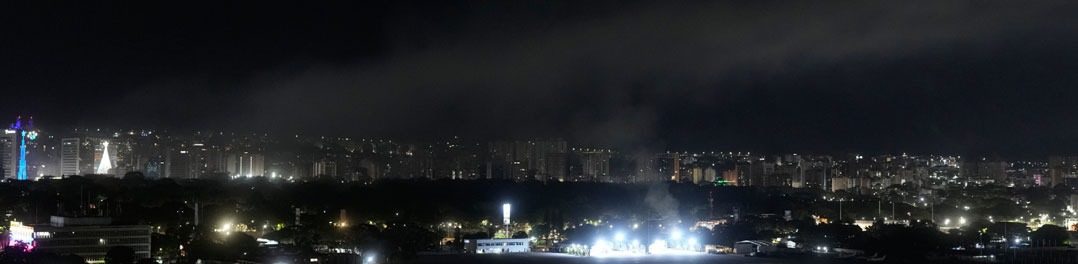
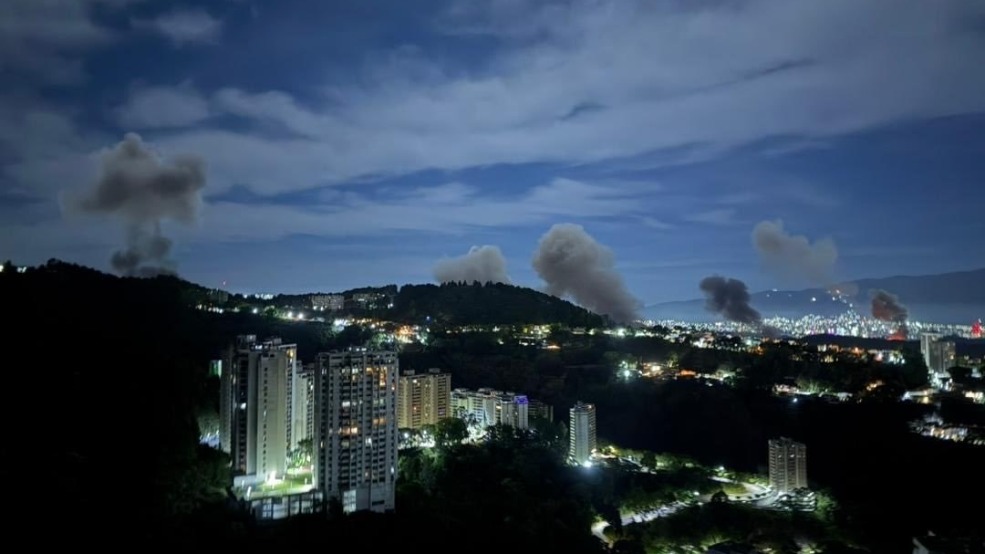
US attack against Venezuela left 100 dead, Venezuela's interior ministry said.
US European Command said it has seized an empty oil tanker linked with Venezuela and registered as a Russian vessel in the North Atlantic in an operation.
Diplomats, business and academic leaders in South Africa have called on the international community to show solidarity with Venezuela and demand the unconditional release of Venezuelan President Nicolas Maduro, while criticizing what they term the "rogue behaviors" against international law by the United States.
Maduro, who was forcibly transferred to New York by US forces earlier this month, faces charges, including narco-terrorism conspiracy, cocaine importation conspiracy, possession of machine guns and destructive devices. He has denied all the "charges".
Carlos Feo Acevedo, Venezuela's ambassador to South Africa, said Maduro is being held as a prisoner of war in the US.
He urged the global community to denounce what he termed "flagrant violation of international law" and the United Nations Charter and press for the immediate release of Maduro and his wife.
He described the operation as a "terrorist act", saying it has been widely rejected by the Venezuelan people, who are demanding the immediate release and return of their president and his wife.
Acevedo said his demand has received international backing, including support from within the US itself, stressing that Venezuelans remain united in rejecting foreign interference.
"The real motive behind the US' continued aggression against the Venezuelan government is its interest in taking over the world's largest oil reserves," he said.
Venezuela also has gas reserves, indisputable mineral wealth, and a strategic geographical location on the American continent, he added.
NJ Ayuk, executive chairman of the African Energy Chamber, based in Johannesburg, echoed the concerns saying the US actions violated Venezuela's sovereignty.
He noted that international institutions such as the United Nations and relevant tribunals should address disputes involving Venezuela.
"The Venezuelans should be asked what they want. They have a right to control their industry and resources," he said. "The international community should walk with Venezuela to ensure that it comes out of this crisis."
The executive chairman called on the African Union and the United Nations to support Venezuela, highlighting its importance to global energy security.
Changing landscape
"Venezuela has the world's highest oil reserves and is expected to produce about 4 million barrels of oil a day in the next five years. That is expected to double in the next 10 years, changing the global landscape of oil and gas production in the region and the world," he said.
He said the country's oil wealth could transform the lives of its citizens through increased revenue, job creation, improved infrastructure and better economic opportunities.
Bongani Mayimele, director of international relations and partnerships at South Africa's National School of Government, said Maduro's abduction and prosecution were illegal. He argued that US courts have no jurisdiction over Venezuela, as they are not international judicial bodies.
He said the heads of state accused of international crimes are tried through international institutions such as the International Criminal Court, warning that the US action undermines global legal frameworks.
Ashraf Patel, a senior researcher at the Institute for Global Dialogue in South Africa, described the abduction of Maduro as a "shocker". He urged the UN General Assembly to develop new mechanisms to address what he termed "rogue behaviors" by powerful states.
Patel warned that failure by the international community to intervene could plunge Venezuela into prolonged instability similar to Iraq.
Meanwhile, South African political parties, civil society, and trade unions have staged protests outside the US embassy in Pretoria over the past week, demanding Maduro's immediate release.
The writer is a freelance journalist for China Daily.



CARACAS -- Venezuelan Defense Minister Vladimir Padrino Lopez said on Friday that 47 soldiers of Venezuela's Bolivarian National Armed Forces were killed in the Jan 3 US attack on the South American nation.
Venezuelan President Nicolas Maduro and his wife were captured by force in the raid, which has drawn worldwide condemnation and concern.
The US military strike against Venezuela has left at least 100 dead, Interior Minister Diosdado Cabello said recently.
CARACAS -- Venezuela's Acting President Delcy Rodriguez on Friday announced three changes to her cabinet.
Miguel Perez Pirela was appointed minister of communication and information, replacing Freddy Nanez, who will head the Ministry of Ecosocialism, Rodriguez said on Telegram.
In his new role, Nanez will be responsible for "continuing to promote public policies for the protection of our Pachamama (Mother Earth) and all matters related to environmental protection," Rodriguez said.
Rodriguez also appointed Anibal Coronado as minister of transport.

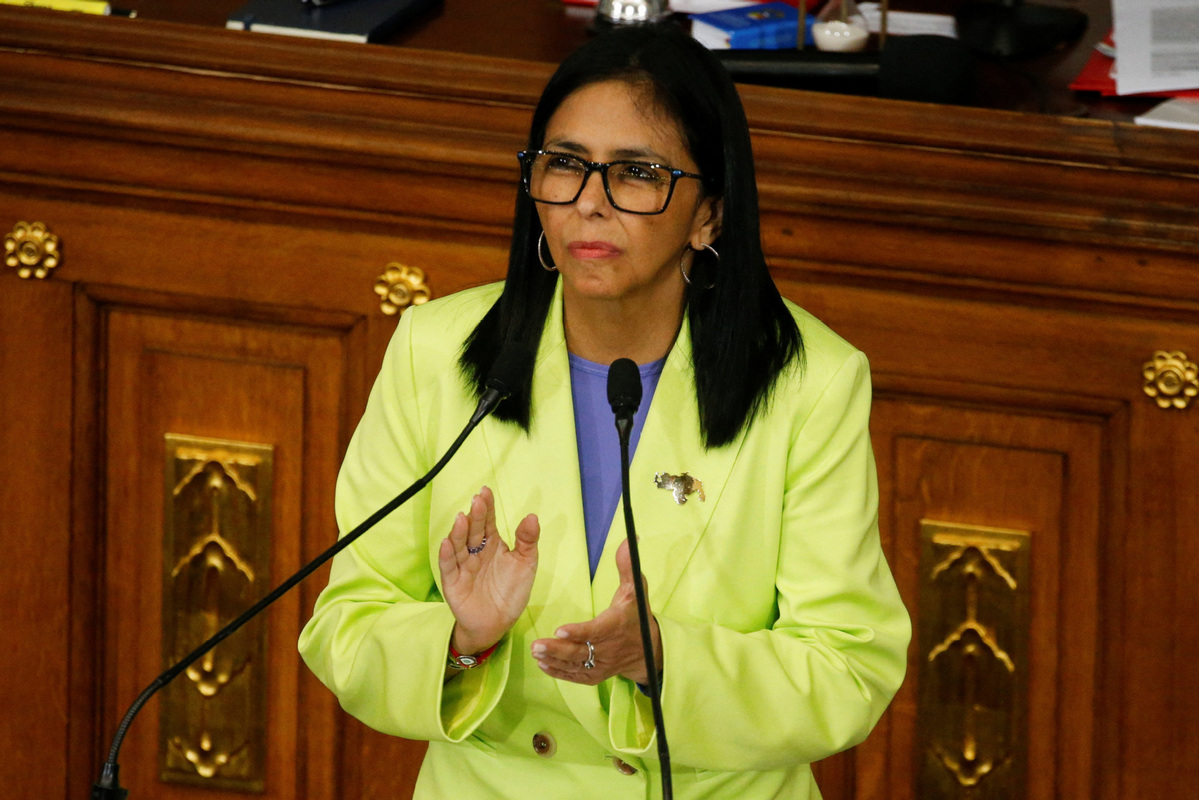
CARACAS -- Venezuela's acting President Delcy Rodriguez said on Thursday that the government is not afraid of engaging in diplomatic dealings with the United States, following an earlier US military attack on the South American country and the capture of President Nicolas Maduro and his wife.
"Let's not be afraid of diplomacy," Rodriguez said during the presentation of the annual state of the nation address.
While highlighting Washington's "historical record" of intervention in Latin America, she asserted that "we are not afraid to confront it diplomatically through political dialogue, as is appropriate."
The government is forging "a new policy," she said, calling on diplomatic corps accredited in Venezuela to convey the reality of the situation to their governments.
Rodriguez also called for unity at home in defending sovereignty and territorial integrity.
"I invite you, as Venezuelans, to preserve the peace of Venezuela, to preserve the tranquility of the homeland, and to do so with absolute dignity and historical responsibility," she said.
Rodriguez added that if she were to travel to the United States as acting president, "I will do so standing tall, walking, not crawling."


CARACAS -- Venezuelan acting president Delcy Rodriguez on Thursday called on the legislature to approve an oil industry reform plan to attract foreign investment and promote the country's economic recovery.
In her annual report to the legislature on behalf of the administrative body, Rodriguez said that the relevant reforms would help improve the operating environment of the oil industry and enhance its capacity for external cooperation.
According to the acting president, the South American nation's oil production reached 1.2 million barrels in December last year. The revenue from oil exports will mainly be used to support the construction of the public health system, promote economic development and advance infrastructure projects.
Venezuela is currently at an important turning point, and the government will explore more pragmatic and diversified ways of foreign exchange, said Rodriguez.
The country should handle its relations with all parties, including the United States, on the basis of mutual respect, she added.

WASHINGTON - Venezuela's acting president Delcy Rodriguez is planning to send an envoy to Washington this week as the Donald Trump administration is weighing the possibility to reopen its embassy in the oil-rich South American nation, according to a Bloomberg report on Tuesday.
Felix Plasencia, Venezuelan ambassador to Britain and former foreign minister, is planning to meet US senior officials in Washington at Rodriguez's behest, said the report, citing people familiar with the plans.
The US military attack on Venezuela is highlighting what African policy experts describe as a troubling erosion of international law, as unilateral actions against the country raise concerns that the use of force outside United Nations frameworks is resurfacing as a tool of global politics, with serious implications for resource-rich and institutionally fragile states in Africa.
African experts said the issue extends beyond one country's fate, touching on the future of a global legal order meant to protect sovereignty, prevent coercion and ensure that international disputes are resolved through dialogue rather than force.
Melha Rout Biel, executive director of the Institute for Strategic and Policy Studies in South Sudan, said the unfolding situation marks a troubling shift away from a rules-based international order, warning that actions taken outside the UN Charter risk normalizing coercive intervention and setting a precedent that could threaten sovereignty across Africa and other resource-rich regions.
"You cannot remove or prosecute a sitting president under another country's jurisdiction and still claim respect for international law," Biel said. "Such actions undermine global norms and signal a return to coercive power politics rather than rule-based international relations."
Biel warned that if unilateral intervention becomes normalized, vulnerable states — especially those rich in oil, minerals and strategic resources — could increasingly face external pressure disguised as legal or security measures.
"This is not limited to Venezuela," he said. "Africa and parts of Asia face similar risks. If the international community allows power to replace law, then sovereignty becomes conditional, not guaranteed."
Olusoji Ajao, founder and executive director of Afrocentric Masterclass in Nigeria, a company that focuses on African culture, history, and perspectives, said that external intervention cannot bring peace and stability.
"Intervention that bypasses multilateral institutions rarely strengthens governance," Ajao said. "Instead, it weakens institutions, harms civilians and prolongs instability."
He cautioned that sanctions and coercive measures often fail to produce political solutions while imposing high social and economic costs on ordinary citizens.
"History shows that these approaches tend to fracture societies rather than reform them," Ajao said.
The experts said the Venezuela situation resonates strongly on the African continent, where several countries have faced sanctions or external pressure with limited positive outcomes.
Biel said Africa's experience shows that externally driven solutions often overlook local realities and undermine long-term stability. "Political problems require political solutions rooted in dialogue and consent," he said. "Force and coercion only delay reconciliation."
Ajao said strengthening domestic institutions remains essential, but should not be used as a justification for external interference.
"Reform must come from within, supported by international cooperation — not imposed through unilateral action," he said.
He urged African countries to take a unified stance in defense of sovereignty and multilateralism.
sharon@chinadailyafrica.com
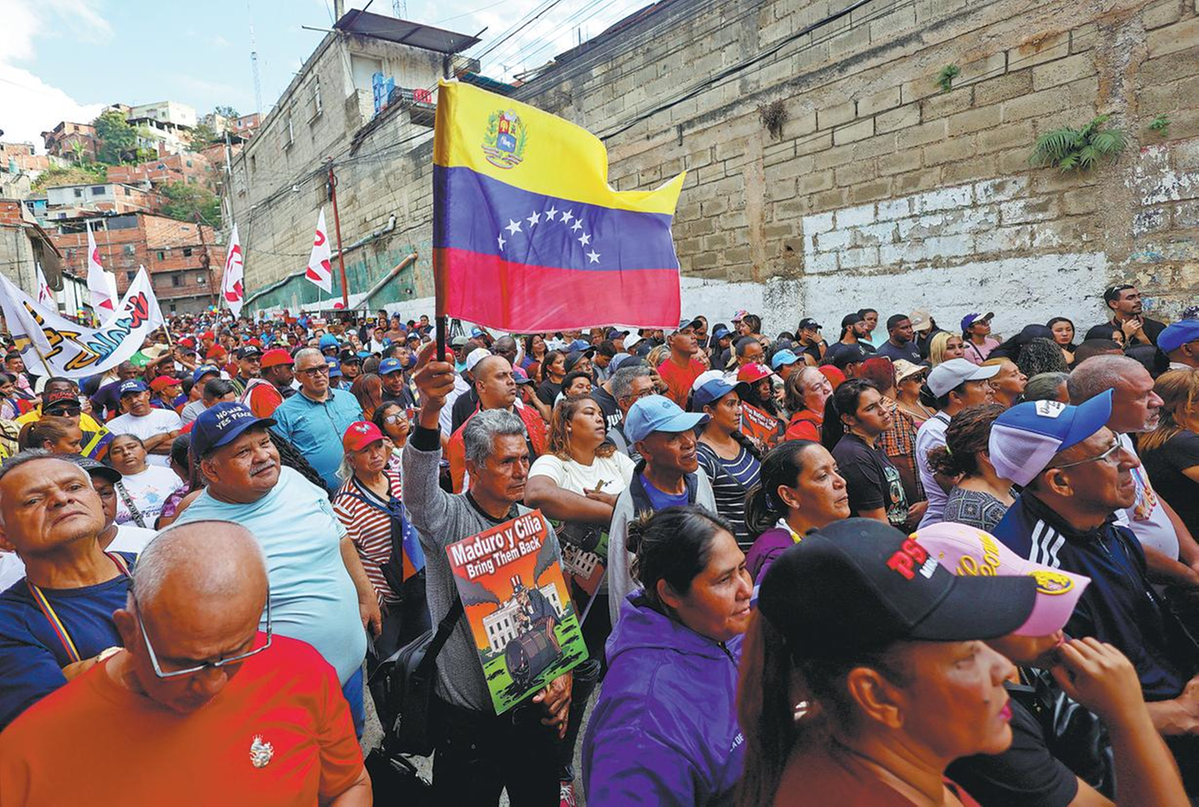
The Trump administration's recent actions, from military raids against Venezuela to reiterating its intention to annex Greenland, signal a concerning shift in US foreign policy toward unilateralism, experts said.
These actions, guided by what experts termed as the "Donroe Doctrine". They added that this new type of Monroe Doctrine, which prioritizes direct expansionary power projection over international law, is set to severely erode the current global order and stability, with a possibility of leading to military conflicts.
At a news conference on Jan 3 after US forces raided Venezuela and abducted its President Nicolas Maduro, US President Donald Trump framed the operation as part of a revival of the Monroe Doctrine, which is a US foreign policy introduced by US president James Monroe in 1823, establishing the Western Hemisphere as a US sphere of influence. "The Monroe Doctrine is a big deal, but we've superseded it by a lot, by a real lot," Trump stated. "They now call it the 'Donroe Doctrine'."
The new doctrine's practical implications have rapidly unfolded. Beyond the Venezuela intervention, the US administration has threatened further actions, including reiterating its intention to annex Greenland and suggesting potential military moves in Colombia and Mexico.

Wei Zongyou, a professor at the Center for American Studies at Fudan University in Shanghai, noted that from the explicit call to enforce a "Trump Corollary" to the Monroe Doctrine in the latest US National Security Strategy, released in early December, to the strikes on Venezuela, it's clear the "Donroe Doctrine" has become a guiding principle of the administration's foreign policy.
Wei explained that the core tenets of the "Donroe Doctrine" include viewing the entire Western Hemisphere as a US sphere of influence, with no tolerance for regimes that the US sees as adversaries or even foes within it and a willingness to use military force for regime change if necessary.
The new doctrine also aims to exclude the so-called "non-Hemispheric" powers from political and economic influence in the region and ensure US control over the region's strategic and economic interests, including key infrastructure, energy, and mineral resources, said Wei.
Sun Chenghao, head of the US-Europe program at Tsinghua University's Center for International Security and Strategy, said the US administration's upgrading of the Monroe Doctrine reflects a redefinition of the US' traditional security perimeter amid shifting global power dynamics.
While the Monroe Doctrine was largely defensive, aimed at preventing European colonial intervention in the Americas, the "Donroe Doctrine" represents a proactive approach to shaping regional order, said Sun.
Its scope has also expanded, Sun noted. "The focus of the 'Donroe Doctrine' is no longer solely on military presence. It also concerns whether non-Hemispheric countries are establishing long-term influence in critical infrastructure, energy corridors, and strategic assets".
Critical foothold
"Once external forces — especially those defined as its strategic competitors — gain a critical foothold in the Western Hemisphere, the US no longer relies on diplomatic pressure but tends to disrupt them through direct deterrence or even limited military operations to block them,"Sun said.
Wei noted that, unlike the Monroe Doctrine born in an era of imperialist expansion and jungle-law mentality, the "Donroe Doctrine" is being proposed in an era where international law exists. "It completely shatters the post-World War II international order based on the UN Charter," Wei said.
According to an interview published in The New York Times on Thursday, Trump said his "own morality" was the only constraint on his power to order military actions around the world. He then added that he needs to abide by international law, but "it depends what your definition of international law is".
World leaders are expressing growing unease. Singapore's Senior Minister Lee Hsien Loong voiced concerns about the US military intervention in Venezuela, saying that it contradicts international law and the UN Charter.
French President Emmanuel Macron accused the US of "breaking free from international rules", while German President Frank-Walter Steinmeier has criticized the US administration's foreign policy and urged the world not to let the world order disintegrate into a "den of robbers".
Sun warned that for the international community, the "Donroe Doctrine" sends a dangerous message that rules and institutions can be temporarily set aside in the face of a major power's core security concerns. "This will erode trust in international law and multilateral mechanisms, potentially prompting more countries to adopt hedging strategies or rely on a security logic of power against power."
"The international system may move further toward fragmentation, with global governance costs rising, posing long-term challenges to the predictability and stability of the entire international order," Sun added.
"The 'Donroe Doctrine' clearly poses a threat to the sovereignty and territorial integrity of small and medium-sized countries, creating a chilling effect on these countries. It is a blatant trampling of the post-World War II international order," said Wei. "The international community should vehemently condemn such actions in multilateral platforms to prevent their recurrence. At the same time, major powers within the UN should join hands to resist the bullying behavior of the US collectively."
Agencies contributed to this story.

Countries in Latin America "have the right to choose their own cooperation partners", while Beijing will continue to deepen cooperation with the countries, a spokeswoman for China's Foreign Ministry has said.
Mao Ning made the remarks on Monday after reports quoted United States President Donald Trump as saying China and Russia "would have" taken control of Venezuela's oil if the US didn't do so, and that China and Russia can buy "all the oil they need from us".
In response, Mao said Venezuela and other Latin American countries are sovereign and independent states with whom China will continue to deepen pragmatic cooperation, regardless of how the situation may evolve.

Some US experts have challenged the legality and motives of the US military operation that led to the forcible seizure of Venezuelan leader Nicolas Maduro, highlighting risks to international norms and regional peace.
In a panel discussion at a forum at the Brookings Institution on Thursday, speakers focused on the military intervention's broader implications.
Vanda Felbab-Brown, director of the initiative on nonstate armed actors, expressed deep skepticism about US intentions and methods."The (Donald) Trump administration feels very emboldened with other very aggressive, really 19th-century imperialist Yankee domination agenda," Felbab-Brown said, pointing to the operation's failure to address underlying issues and its potential to spark unrest.
She warned of the danger of prolonged instability from such unilateral actions. "There is a tremendous amount of possibility of either stagnation staying as it is, with all its problems and its fundamental accountability and legitimacy, or many forms of violence exploding across the country," Felbab-Brown added, emphasizing how the approach could exacerbate tensions without genuine resolution.
Thomas Wright, a senior fellow in foreign policy, condemned the resource-driven nature of the policy."It presents US foreign policy as focused on that extractive domination element and not actually a normative goal," Wright said, comparing the operation with past interventions and arguing that it undermines principled diplomacy.
Scott R. Anderson, a fellow in governance studies, focused on the legal flaws. "That is a very contentious legal proposition for the rest of the world and that no one else in the rest of the world has really clearly bought into, even those who have been tentatively supportive of the Trump administration's actions for the simple reason that it would be hugely destabilizing," Anderson said.
The US Senate had advanced a War Powers Resolution to limit further US involvement by Jan 8, reflecting domestic pushback against the operation's unilateral nature.
An earlier Jan 5 event at the Center for Strategic and International Studies echoed some of these concerns. Christopher Hernandez-Roy, deputy director of the Americas program, criticized the coercive approach. "I think 'running the country' means forcing the administration under the threat of further military action to do these headline items," Hernandez-Roy said.
Clayton Seigle, a senior fellow in energy and geopolitics, warned of uncertainties in US economic objectives. "The preeminent requirement is political stability. And a lot of people are talking about that this week because the events … haven't really clarified what the outlook for political stability in Venezuela is going to be."
Trump, in a Jan 6 statement, asserted US oversight, claiming Washington would "run" the country if necessary. Secretary of State Marco Rubio, in a Jan 7 interview with The New York Times, outlined phases emphasizing US-imposed stability, further fueling debates over the motives for intervention.
Felbab-Brown at Brookings reiterated the potential for escalation. Resource pursuits could lead to "many forms of violence exploding across the country", she said.

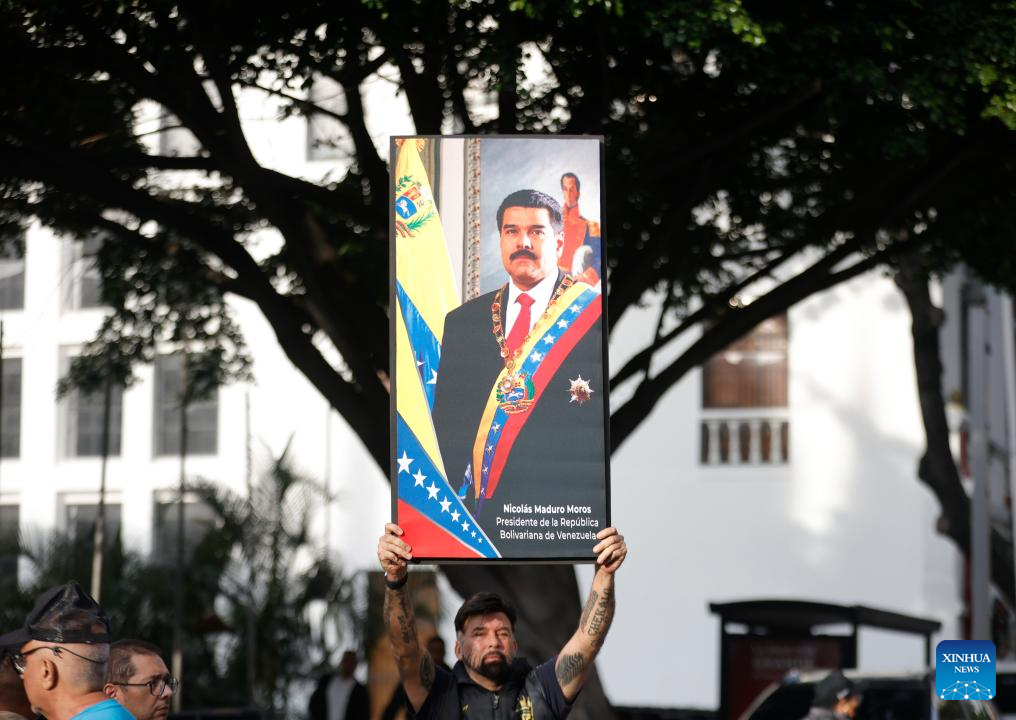
At 3 am on Jan 3, the United States Army launched Operation Absolute Resolve, a coordinated military attack on Venezuelan command-and-control infrastructure, and abducted President Nicolas Maduro and his wife from Caracas.
This action effectively erased the sovereign border between Venezuela and the US judicial jurisdiction, treating a sovereign nation like a subordinate colony. Diplomatic immunity was brushed aside, the United Nations Charter was ignored and international law was brazenly violated. What unfolded was not law enforcement, but an illegal reconquest of the area — an update of the neocolonial playbook exposed decades ago by Uruguayan writer Eduardo Galeano in his seminal work Open Veins of Latin America.
The stated objective, as always, was a crackdown on drugs. The US often lets traffickers go when it is politically useful while conveniently ignoring the fact that the demand for drugs in the US drives the global narcotics trade. The so-called "war on drugs" is therefore just a geopolitical camouflage — a mechanism for controlling resources in the Global South.
Operation Absolute Resolve is haunted by the ghost of Manuel Noriega. The parallels between the 1989 invasion of Panama and the 2026 invasion of Venezuela are not coincidental but doctrinal. In both instances, a Latin American leader was demonized as a drug trafficker, indicted by US courts and forcibly removed by US military power.
However, there is an abyssal divergence in the material conditions of these two interventions. Panama in 1989 was a client state whose leader had gone rogue, but the Panama Canal remained the primary strategic asset. Venezuela in 2026 is a founding member of the Organization of the Petroleum Exporting Countries with the world's largest proven oil reserves and a strategic partnership with China. The Panama template is being applied to a scenario of vastly higher geopolitical complexity.
The legal language is about drugs, but the economic basis is imperialism, which is the highest level of capitalism. The US government has openly said that it wants to tap Venezuela's vast oil reserves for profit. This takes away the pretense of humanitarian concern from the operation.
The US economy needs Venezuela's heavy crude, which is the biggest and cheapest feedstock to keep its refineries profitable during times of inflation and a slowing shale boom. The invasion is a way to forcefully bring these resources back into the US cycle of accumulation, avoiding sovereign rent-seeking.
The deepening ties between Caracas and Beijing were very important to the timing of the attack. The invasion was a preemptive strike to stop the China-Venezuela energy partnership from getting stronger, protect the petrodollar system from Venezuela's move toward the yuan or petro and use military force to enforce secondary sanctions when economic pressure does not work.
International law forbids taking foreign nationals and heads of state from their countries. The US has acted like a rogue state by following the 1989 Barr Memo, which goes against the UN Charter and the Vienna Convention.
From the perspective of the Third World Approaches to International Law, the "war on drugs" represents the contemporary continuation of colonial "punitive expeditions". It lets the metropole use force in a civilizing mission to "save" the periphery. The empire must get rid of the trafficker because they have turned a political enemy — the socialist — into a criminal enemy.
The US may have won a tactical battle in Caracas, but it has lost the war in the hearts and minds of people in the Global South. China has called the act a hegemonic violation, and there are likely to be uneven responses, such as de-dollarization or the Group of 77's diplomatic mobilization, among other multilateral calls for reason.
The invasion has also broken the illusion of hemispheric unity in the region. Progressive governments in Colombia and Brazil see this as a return to gunboat diplomacy, which is moving the region away from the Organization of American States and toward the Community of Latin American and Caribbean States and BRICS.
The seizing of Maduro and his wife strips away the democratic veneer of US foreign policy, revealing the naked predatory logic of late-stage imperialism, a zero-sum game. For the Global South, international law offers no protection against an empire in crisis. Security lies not in compliance with the rules-based order, but in the construction of robust multipolar alliances, autonomous economic systems and the capacity for asymmetric defense.
The invasion of Venezuela is not the end of the Bolivarian Revolution but the beginning of its most critical phase. The dialectic of history turns once more, not toward the end of history promised by neoliberalism, but toward a sharpened conflict between the forces of sovereign emancipation and the forces of imperial subjugation. The US has swallowed the bait of immediate resource seizure, only to find itself ensnared in the trap of a protracted, delegitimizing colonial war.
The author is from Brazil and a professor of international law at the School of Law of Lanzhou University.
The views don't necessarily represent those of China Daily.
If you have a specific expertise, or would like to share your thought about our stories, then send us your writings at opinion@chinadaily.com.cn, and comment@chinadaily.com.cn.

The US military attack on Venezuela is highlighting what African policy experts described as a troubling erosion of international law, as unilateral actions against the country raise concerns that the use of force outside United Nations frameworks is resurfacing as a tool of global politics, with serious implications for resource-rich yet institutionally fragile states in Africa.
African experts said the issue extends beyond one country's fate, touching on the future of a global legal order meant to protect sovereignty, prevent coercion and ensure that international disputes are resolved through dialogue rather than force.
Melha Rout Biel, executive director of the Institute for Strategic and Policy Studies in South Sudan, said the unfolding situation marks a troubling shift away from a rule-based international order, warning that actions taken outside the UN Charter risk normalising coercive intervention and setting a precedent that could threaten sovereignty across Africa and other resource-rich regions.
"You cannot remove or prosecute a sitting president under another country's jurisdiction and still claim respect for international law," Biel said.
"Such actions undermine global norms and signal a return to coercive power politics rather than rule-based international relations."
Biel warned that if unilateral intervention becomes normalized, vulnerable states—especially those rich in oil, minerals and strategic resources—could increasingly face external pressure disguised as legal or security measures.
"This is not limited to Venezuela," he said.
"Africa and parts of Asia face similar risks. If the international community allows power to replace law, then sovereignty becomes conditional, not guaranteed."
Olusoji Ajao, founder and executive director of Afrocentric Masterclass in Nigeria — a company that focuses on African culture, history, and perspectives, said that external intervention cannot bring in peace and stability.
"Intervention that bypasses multilateral institutions rarely strengthens governance," Ajao said.
"Instead, it weakens institutions, harms civilians and prolongs instability."
He cautioned that sanctions and coercive measures often fail to produce political solutions while imposing heavy social and economic costs on ordinary citizens.
"History shows that these approaches tend to fracture societies rather than reform them," Ajao said.
The experts said the Venezuelan situation resonates strongly on the African continent, where several countries have faced sanctions or external pressure with limited positive outcomes.
Biel said Africa's experience shows that externally driven solutions often overlook local realities and undermine long-term stability.
"Political problems require political solutions rooted in dialogue and consent," he said.
"Force and coercion only delay reconciliation."
Ajao said strengthening domestic institutions remains essential, but should not be used as a justification for external interference.
"Reform must come from within, supported by international cooperation — not imposed through unilateral action," he said.
He urged African countries to take a unified stance in defence of sovereignty and multilateralism.
"During the Cold War, Africa was often used as a battleground for competing powers and gained very little," Ajao said.
"This time, Africa must insist on one voice, one position, and strict respect for international law."
As Venezuela's crisis continues to unfold, African voices emphasize the need for solutions rooted in dialogue, respect for sovereignty and strengthened domestic institutions — lest the continent face similar dilemmas in an ever more complex global landscape.
African leaders and political groups expressed alarm over the United States' military action, calling for restraint, while warning of wider global repercussions.
The African Union in a statement, reaffirmed its commitment to the principles of international law, including respect for sovereignty and territorial integrity.
Venezuela's internal challenges can only be addressed sustainably through inclusive political dialogue among Venezuelans themselves, it said.
South Africa, the Democratic Republic of Congo, Somalia, Liberia, Ghana, Namibia among others have called on international bodies to act swiftly to uphold the UN Charter, protect Venezuela's sovereignty and prevent an escalation threatening regional and global peace.
sharon@chinadailyafrica.com


Anyone still not clear about what gunboat diplomacy means only has to look at what the United States has done to Venezuela to gain enlightenment. It has abducted the president of the South American country and is implementing plans to rob it of its oil resources.
If that is not enough, US President Donald Trump's remarks about Greenland, an autonomous island of Denmark, leave no room for equivocation.
In response to a question from the BBC on Friday, Trump said that the US needs to "own" Greenland to prevent Russia and China from doing so, and that the US will acquire it either "the easy way" or "the hard way". This follows a recent White House statement that the administration was considering buying the territory of fellow NATO member Denmark, but it would not rule out the option of annexing it by force.
By saying so, the US leadership has shown that it does not have a smattering of respect for the sovereignty and territorial integrity of a sovereign country.
In a joint statement on Friday, Greenland's political parties rejected Trump's repeated threats to take control of the island, saying that its future must be decided by its people.
The joint statement issued by the leaders of various political parties in Greenland, stating that "Greenlanders do not want to become Americans", was a clear expression of the sentiment of the overwhelming majority of Greenland's population, who have consistently opposed the idea of becoming part of the US.
The statement effectively closed the loophole that the US administration might have hoped to exploit by claiming to act on the wishes of the Greenlandic people to "obtain" the island. The statement also prevents the US from creating and exploiting discord between the autonomous territory and Denmark, and legally blocks the possibility of the US acquiring Greenland.
By openly declaring that "it needs" an autonomous region of another sovereign country, Washington is telling the world that it has no regard for norms of international relations and no respect for international law.
Denmark is a member of NATO, and the US has long been the leader of the security alliance. If the US takes Greenland by force, it will be attacking its own ally. That effectively means the end of NATO.
If the abduction of Venezuelan President Nicolas Maduro and his wife on Jan 3 emboldens the US to proceed with the annexation of Greenland, it will only further encourage the US administration to do whatever it wants in brazen disregard of international law.
If Washington is allowed to use the lie that other countries intend to grab Greenland to acquire the Danish territory, then the US would be able to use the same pretext to grab whatever territories it desires from any other country. If that becomes the reality, the world will plunge into the colonial past in which might was right and there will be no fairness and justice in international relations.
Leaders of seven European countries — Denmark, France, Germany, Italy, Poland, Spain and the United Kingdom — issued a joint statement last week affirming that Greenland "belongs to its people".
More European countries should stand up to the threat of the US and stand firmly behind Greenland. The so-called "Trump Corollary" of seeking absolute control over the geography, resources and sovereignty of the Americas, and even the entire Western Hemisphere, is threatening global stability and world peace. Not only Europe but the entire world should oppose the imperiousness of the US administration.
China has long maintained that respecting the sovereignty and territorial integrity of other countries is a basic principle of international relations. The international community should not allow the US to have an inch or it will take yard after yard after yard.
By abducting the Venezuelan president and voicing an unjustified claim on Greenland, Washington has shown it is prepared to plunge the entire world into chaos so it can feather its own nest.

CARACAS -- Venezuelan lawmaker Nicolas Maduro Guerra said on Saturday that his father, President Nicolas Maduro, sent a message through his lawyers saying he is in good condition and remains resolute while being held in the United States.
"The lawyers told us they are strong and that we should not be sad," Guerra said while addressing leaders of the ruling United Socialist Party of Venezuela.
He quoted his father as saying: "We are well. I am a fighter."
President Maduro and his wife, Cilia Flores, are currently held in the United States after US forces carried out military strikes in Caracas and three other Venezuelan cities on Jan 3, an operation that resulted in their capture. The strikes have drawn worldwide condemnation and concern.
Maduro Guerra said his father remains unbroken, adding that the government and its supporters "are united and standing firm."
"The strength of Chavismo lies in unity. Whatever happens, we must remain united," he said.
Venezuela's acting president, Delcy Rodriguez, on Saturday pledged to secure the return of Maduro and his wife. Speaking at a community event in Miranda state, Rodriguez said there was no uncertainty about Venezuela's leadership or governing program.
"There is no uncertainty here. The Venezuelan people are in charge, and there is a government, that of President Nicolas Maduro," she said, calling for unity to guarantee peace, stability and the country's future.
WASHINGTON - The US Department of State's Bureau of Consular Affairs on Saturday warned that as international flights have resumed, US citizens in Venezuela "should leave the country immediately."
The bureau said in a post on X that the security situation in Venezuela "remains fluid" and there are "reports of groups of armed militias, known as colectivos, setting up roadblocks and searching vehicles for evidence of US citizenship or support for the United States."
US citizens are advised to "remain vigilant and exercise caution" when traveling by road and to monitor airlines' communications and websites for updated information.
"Venezuela has the highest Travel Advisory level -- Level 4: Do Not Travel -- due to severe risks to Americans, including wrongful detention, torture in detention, terrorism, kidnapping, arbitrary enforcement of local laws, crime, civil unrest, and poor health infrastructure," the bureau said.
The United States launched a large-scale military operation against Venezuela in the early hours of Jan 3, taking by force Venezuelan President Nicolas Maduro and his wife. The strikes have drawn worldwide condemnation and concern.

CARACAS -- Venezuela's acting president Delcy Rodriguez on Saturday pledged to realize the return of President Nicolas Maduro and his wife, Cilia Flores, who were seized by the United States on Jan 3.
Speaking at a community event in Miranda state, Rodriguez said there was no uncertainty about Venezuela's leadership or governing program.
"There is no uncertainty here. The Venezuelan people are in charge, and there is a government, that of President Nicolas Maduro," she said, calling for unity to guarantee peace, stability and the country's future.
Rodriguez vowed not to rest "for a single minute" until Maduro and Flores return to Venezuela.
She noted that a year ago, she was sworn in alongside Maduro at the start of his third term, adding that "today, one year later, we are swearing for his freedom."
Rodriguez said national unity would be decisive in what she described as the effort to "rescue" Maduro, reaffirming that her government continues to implement the seven lines of action set by Maduro.
US forces carried out military strikes in Caracas and three other Venezuelan cities on Jan 3, an operation that led to the seizure of Maduro and Flores. The strikes have drawn worldwide condemnation and concern.

NEW YORK -- US President Donald Trump on Friday signed an executive order declaring a national emergency to "safeguard Venezuelan oil revenue held in US Treasury accounts from attachment or judicial process," ensuring the funds are preserved "to advance US foreign policy objectives," according to a release by the White House.
The executive order blocks any attachment, judgment, decree, lien, execution, garnishment, or other judicial process against Foreign Government Deposit Funds, which are defined as the Venezuelan oil revenues and diluent sales held in US Treasury accounts, according to the White House fact sheet.
The order also prohibits transfers or dealings in these funds except as authorized, superseding any prior executive orders that might block or regulate them.
"The possibility of attachment or the imposition of judicial process against the Foreign Government Deposit Funds constitutes an unusual and extraordinary threat to the national security and foreign policy of the United States, which has its source in whole or substantial part outside the United States," said the order.
The Foreign Government Deposit Funds are sovereign property of Venezuela held in US custody for governmental and diplomatic purposes, not subject to private claims, according to the White House.
"The United States Government will hold the Foreign Government Deposit Funds solely in a custodial and governmental capacity, and not as a market participant," said the order.
The funds have not been, and shall not be, used for any commercial activity in the United States, added the order.
US Energy Secretary Chris Wright said Wednesday that the United States will not only market stored oil in Venezuela but also control the sales of oil output from the country indefinitely.

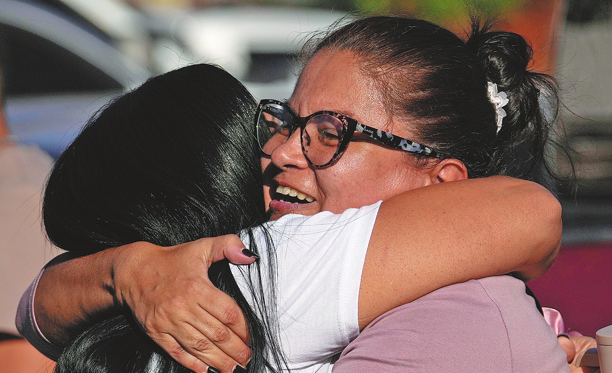
The US Senate passed a resolution 52-47 on Thursday to allow a debate aimed at curbing US President Donald Trump from using military force against Venezuela without congressional approval.
This procedural vote opened the door to a debate expected next week that would force Trump to seek congressional authorization for any continued military operations in Venezuela.
The resolution was initiated by Senator Tim Kaine, a Democrat from Virginia, and was co-sponsored by Republican Senator Rand Paul from Kentucky, Democratic Senator Adam Schiff from California and Senate Minority Leader Chuck Schumer from New York.
"Instead of responding to Americans' concerns about the affordability crisis, President Trump started a war with Venezuela that is profoundly disrespectful to US troops, deeply unpopular, suspiciously secretive and likely corrupt. How is that 'America First'?" Kaine asked. "Trump's war is also clearly illegal because this military action was ordered without the congressional authorization the Constitution requires."
Five Republicans voted for the resolution along with all the Democrats, and Trump slammed them by calling their acts "stupid".
"Republicans should be ashamed of the senators that just voted with Democrats in attempting to take away our powers to fight and defend the United States of America. Susan Collins, Lisa Murkowski, Rand Paul, Josh Hawley, and Todd Young should never be elected to office again," Trump wrote on Truth Social. "This vote greatly hampers American self-defense and national security, impeding the president's authority as commander-in-chief."
Trump doesn't want to be constrained by Congress. In an interview with The New York Times on Thursday, Trump declared that his power as commander-in-chief is constrained only by his "own morality".
"I don't need international law," he told the NYT. "I'm not looking to hurt people."
Trump's military strike last weekend to seize Venezuelan President Nicolas Maduro and bring him to the US has prompted widespread opposition in the US. People are concerned about its implications for international stability and unfavorable consequences for the US.
Tom Watkins, a former school superintendent in Michigan and a business and education consultant, said Jan 3 is "a day that will live in infamy".
Watkins told China Daily that the military strike is not about drug trafficking.
"It is about regime change, power, money, oil and deflecting attention away from American citizens being squeezed economically, along with the shady release of the Epstein sex files," he said.
Watkins said that Trump is not simply bending international norms, "he is destroying them".
The strike on Venezuela is a grave matter, according to Watkins. "The rules-based international order has been shredded. Time will tell how the pieces will be rearranged."
The military strike on Venezuela immediately sparked protests around the country.
In Seattle, Washington, protest organizer Taylor Young told a local TV station that Venezuela's "sovereignty and self-determination have been violated by our government using our tax dollars".
Meanwhile, Trump said on Thursday that the United States would begin carrying out land strikes against drug trafficking cartels.
"We've knocked out 97 percent of the drugs coming in by water, and we are gonna start now hitting land with regard to the cartels," Trump said in an interview with Fox News.
Amid US pressure, Venezuela's Acting President Delcy Rodriguez said on Thursday that her country is not "subjugated" to the US.
Also on Thursday, Venezuela began releasing a "large number" of political prisoners, including several foreigners.
The White House credited Trump with securing the prisoners' freedom. "This is one example of how the president is using maximum leverage to do right by the American and Venezuelan people," Deputy Press Secretary Anna Kelly said in a statement to AFP.
Agencies and Xinhua contributed to this story.
mayzhou@chinadailyusa.com

CARACAS -- Venezuela has decided to initiate an "exploratory" diplomatic process with the US government, Venezuelan Foreign Minister Yvan Gil said Friday in an official statement.
In the statement posted on his social media account, Gil said the talks are intended to "address the consequences arising from the aggression" and the US seizure of Venezuelan President Nicolas Maduro and his wife.
The exploratory dialogue will also cover "a working agenda on issues of mutual interest," the ministry said.
The Foreign Ministry added that in this context, a delegation of US State Department officials is currently in Venezuela.
WASHINGTON -- The US military seized the fifth oil tanker allegedly linked to Venezuela early Friday morning as a team of US diplomats and security personnel arrived in Caracas, the capital of the oil-rich South American country.
The US team will assess the possibility of reopening the US embassy in Venezuela, according to a US official, after Venezuelan President Nicolas Maduro and his wife were seized in a US raid on Jan 3.
"In a pre-dawn action, Marines and Sailors from Joint Task Force Southern Spear, in support of the Department of Homeland Security, launched from the USS Gerald R. Ford and apprehended Motor/Tanker Olina in the Caribbean Sea without incident," US Southern Command said in a press release.
"Apprehensions like this are backed by the full power of the US Navy's Amphibious Ready Group, including the ready and lethal platforms of the USS Iwo Jima, USS San Antonio, and USS Fort Lauderdale," the command said.
The US official said Friday that personnel from the State Department's Colombia-based Venezuela Affairs Unit, including the unit's chargé d'affaires John McNamara, will "conduct an initial assessment for a potential phased resumption of operations" in Caracas, where the US embassy was closed in 2019 with all embassy staff withdrawn.
On Friday morning, US President Donald Trump praised cooperation from Venezuelan acting president Delcy Rodriguez, announcing that a second US strike against Venezuela "will not be needed."
"The USA. and Venezuela are working well together, especially as it pertains to rebuilding, in a much bigger, better, and more modern form, their oil and gas infrastructure," Trump wrote on Truth Social, saying that "Venezuela is releasing large numbers of political prisoners."
Seven prisoners were freed in the nation on Thursday, and many more are expected on Friday, according to media reports.
"Because of this cooperation, I have cancelled the previously expected second Wave of Attacks ... however, all ships will stay in place for safety and security purposes," said Trump.
The US military buildup in the Caribbean near Venezuela has reached its largest scale in more than three decades.
"At least 100 Billion Dollars will be invested by BIG OIL, all of whom I will be meeting with today at The White House," Trump added.
The US president touted on Thursday night that the United States will get huge money from selling Venezuelan oil, while expecting US oil companies to play a key role in rebuilding Venezuela's oil industry.
"We're taking billions and billions of dollars worth of oil, and it'll be hundreds of billions of dollars. It'll be trillions of dollars, but we're going to be there till we straighten out the country," Trump said Thursday night in an interview with Fox News.
US Vice President JD Vance said Thursday that currently part of his job is "to try to ensure that Venezuela is stable, and as the President (Trump) has directed us to do, to ensure that the new Venezuelan government actually listens to the United States and does what the United States needs it to do under our country's best interest."
US Energy Secretary Chris Wright said Wednesday that the United States will not only market stored oil in Venezuela but also control the sales of oil output from the country indefinitely.?







