



Consolidation promotes development of farming sector









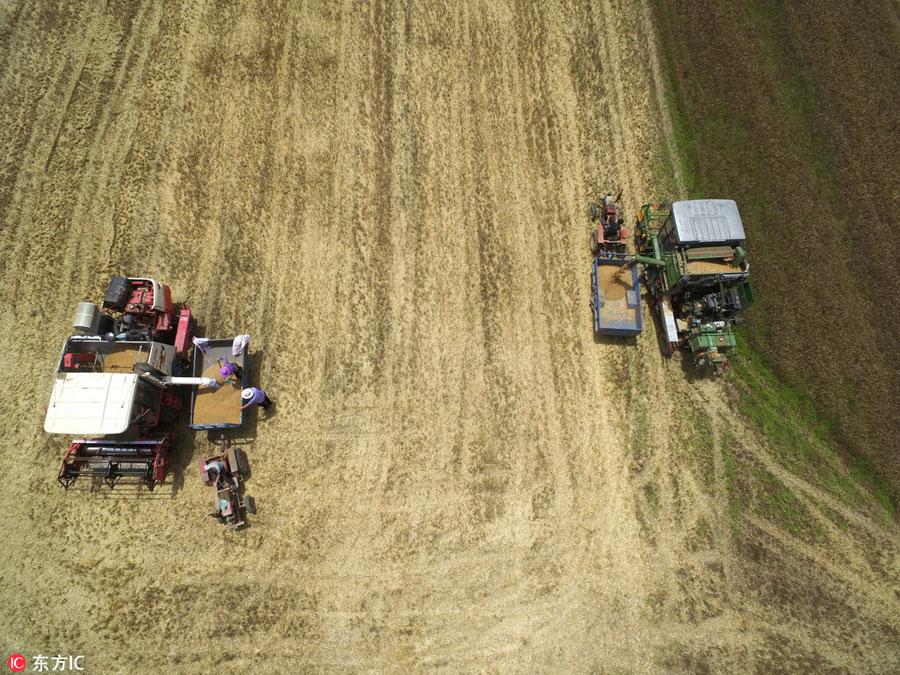
Between 1949, when the People's Republic of China was founded, and 1952, the landlord system was abolished and farmers were given full ownership of their land: they could buy, sell, operate it freely or lease it to other people.
However, in 1953, China started its socialist transformation, which promoted collective land ownership by rural cooperatives and related groups. Farmers worked together in units and did not have the right to lease land to others or transfer ownership.
In 1978, farmers were allowed to sign contracts with villagers' committees for use of an agreed area of land operated by local cooperatives.
In the years that followed, more efficient production methods resulted in higher yields and led to the founding and promotion of family-based individual farms on contracted land nationwide.
That transformation prompted the nation's farmers to raise their work rates, which resulted in better yields and ensured food shortages and hunger quickly became history.
However, although farmers had the right to work the land they contracted they were not allowed to transfer or lease it, so it was generally not in circulation - that is, leased out - in rural areas.
To provide a greater sense of security among farmers, in 1997 and 2017, the central government pledged that land contracts would automatically be extended for 30 years when they expired.






- Aurora seen in Beiji village of Mohe, NE China
- Guangdong lychee farmers adopt AI for disease, pest detection
- Xi congratulates Central African Republic president on reelection
- Encounter Xinjiang: The purple miracle of Xinjiang
- China's supreme court highlights stronger crackdown on emerging crimes
- China's top procuratorate urges strong stance on serious economic crimes