



Tsinghua scientists design electronic skin









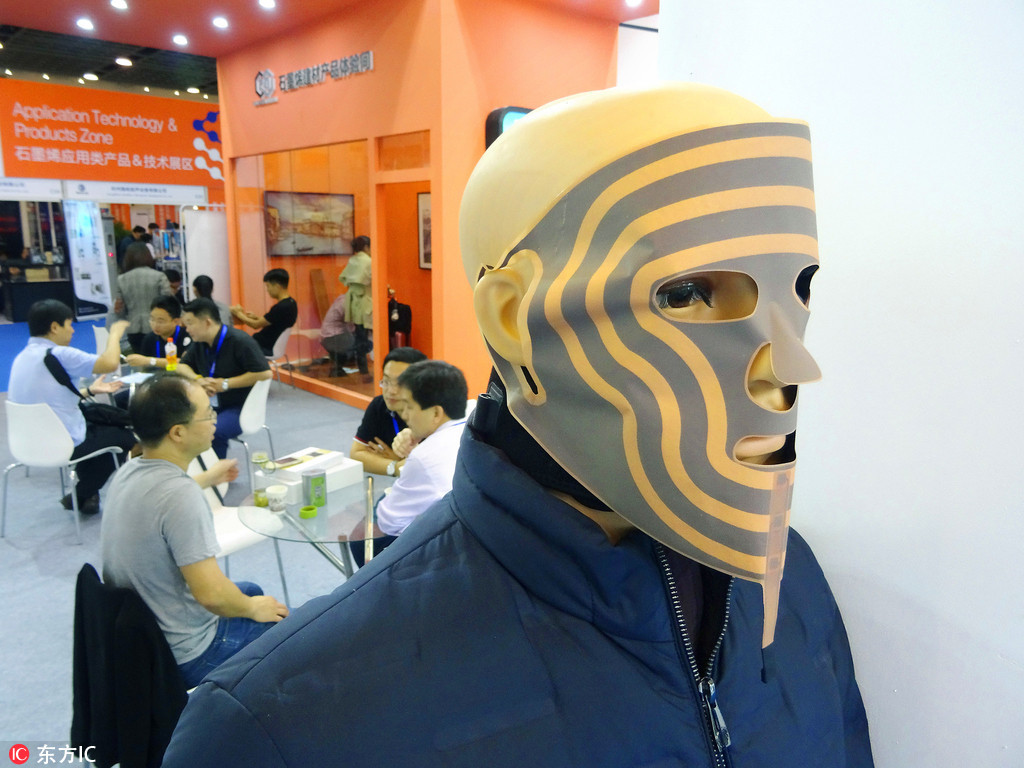
Chinese scientists have developed a graphene-based tattoo-like electronic skin that could function as a wearable device to monitor a person's health.
Electronic skin refers to thin, flexible and stretchable electronic material that mimics human skin and can sense pressure, temperature and stretch.
Graphene, a superthin material with excellent flexibility and conductivity, is an ideal material for electronic skin, according to the experts.
Scientists from Tsinghua University have demonstrated how to make graphene-based electronic skin using laser scribing technology. In a process aided by water, the electronic skin is transferable not only to human bodies but also to other substrates such as leaves and silk.
It could be attached to human skin and used to measure such things as body functions - a person's breathing, heartbeat and voice, for example.
The electronic skin exhibits high sensitivity and long-term stability.
It can withstand high temperatures and is comfortable to wear, according to the scientists, whose research was published in the journal ACS Nano.
Electronic skin has huge potential in healthcare and intelligent systems, the scientists said.
They added that with laser scribing technology, the pattern of the graphene-based electronic skin can also be personalized, a feature that could help commercialization.
Xinhua






- Ex–China Construction Bank executive gets 18 years for bribery, loan violations
- First batch of eco-friendly pioneer zones for construction of beautiful countryside unveiled
- Woodpeckers, finches captured in Jilin winter scenes
- Mainland reiterates 1992 Consensus as foundation for resuming cross-Strait dialogue
- PLA drone training near China's Dongsha island lawful: spokesperson
- China's top political advisor stresses boosting new five-year plan off to a good start