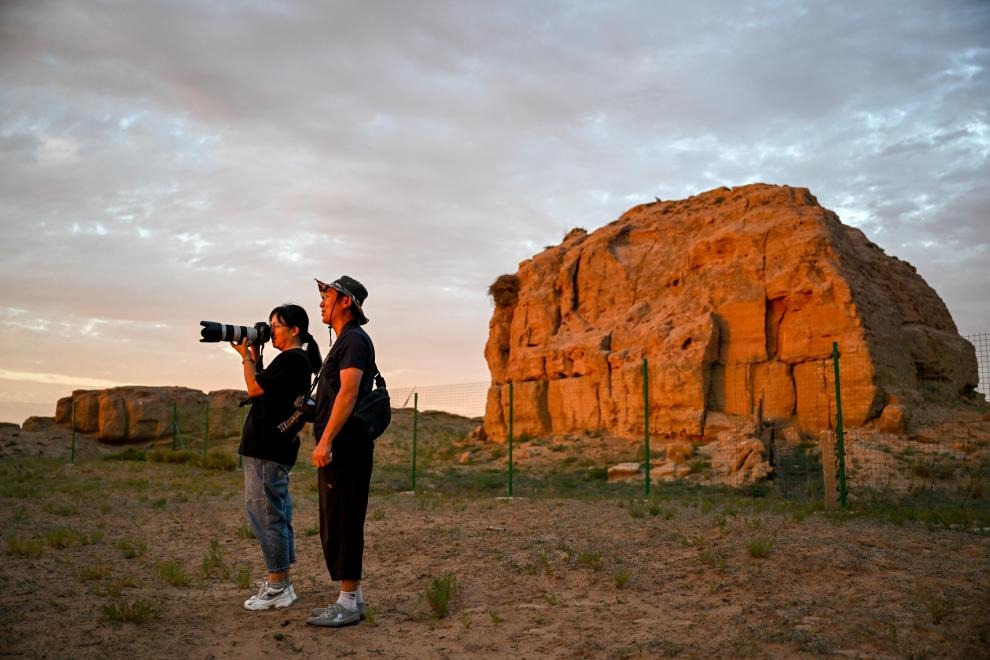



3,000-year-old village ruins discovered in China









HOHHOT - Chinese archaeologists have discovered the ruins of a Bronze Age village dating back more than 3,000 years in Chifeng city, North China's Inner Mongolia autonomous region.
Located to the west of a village, the ruins cover an area of around 15,000 square meters.
Three tombs including a joint burial were found, together with some pottery and two ditches. Excavation work is under way.
Cao Jian'en, head of the regional institute of archaeology, said preliminary research showed that the ruins were mainly from the Weiyingzi Culture, a branch of Bronze Age culture during late Shang Dynasty (1600-1046 B.C.).
"The discovery will provide new reference for studies on archaeology and culture in southeast region of Inner mongolia during the Bronze Age," Cao said.





- Civil aviation readies for record rush
- Innovative architecture gives rise to schools of the future
- New Year art draws on town's colorful tradition
- Debris-hit spacecraft returns after 270 days in orbit
- Arab League delegation visits China-Arab Research Center on Reform and Development for 10th anniversary
- Shanghai Jiao Tong University launches Center for Studies of Global South Sustainable Development